They’ve built their own mould

Olympian and IOA vice president Gagan Narang explains why Gen Z isn’t fitting into old systems — they’re faster, values-driven and unapologetically plural
Gagan Narang is not someone who views Indian sport from a boardroom window. The four-time Olympian and 2012 Olympic Games men’s 10 meter Air Rifle medalist, now Vice President of the Indian Olympic Association and a steady hand in athlete welfare and governance, has lived every layer of the sporting pyramid. He nurtures young shooters through his shooting academies, sits in policy meetings, and listens closely to what the next generation wants. That vantage point gives him a ringside view of a shift he believes is rewriting Indian sport at its roots. Case in point here are the Gen Z sportsperson.
“When you look at Gen Z in sport today, you immediately notice one thing — they’re not trying to fit into the old mould. They’re building their own,” he says. It’s not criticism; it’s observation from someone who grew up in a more traditional system and now mentors athletes who move with a different rhythm entirely.
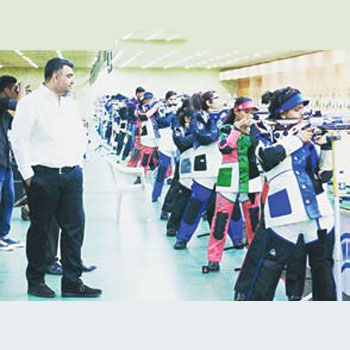
The most striking change, in his eyes, is their relationship with technology. For his own generation, adopting to gadgets felt like levelling up. For Gen Z, tech feels like an extra limb. Fitness trackers, technique-analysis apps, nutrition reminders, sleep monitors — these tools aren’t upgrades; they’re defaults. “A teenager in a small town today has access to knowledge and insights that earlier generations couldn’t have imagined,” he says. With that knowledge comes a compressed learning curve and a thirst for instant feedback. Long lectures have given way to clipped videos, sharp corrections and training sessions that feel more like iterative sprints than old-school marathons. “Gen Z doesn’t want to wait for results; they want to see them evolve in real time.”
But that speed isn’t the whole story. Gagan sees a deeper shift in values. If millennials were driven by stability and traditional success markers, Gen Z, he says, is anchored in purpose—they openly speak about mental health; they challenge outdated structures; they want reasoning, not diktats. “They want to know why they’re doing something, not just because the coach said so. What looks like rebellion is often engagement. They want a voice in shaping their own journey,” he says.
Identity has changed shape as well. Earlier, athletes waited for medals before cultivating a public persona. Gen Z does it from day one. They share routines, setbacks, inside jokes, even the unglamorous grind. Visibility is democratised now. A talented junior doesn’t need a podium moment to be discovered. As Gagan points out, this opens doors but also intensifies scrutiny.
He is fascinated by their fluidity. “A young athlete could be a national-level competitor, a content creator, and a part-time gamer, all at once,” he notes with a mix of amusement and admiration. Old systems, built to box athletes into single lanes, he says, are struggling to keep pace with a generation that refuses to be onedimensional.
What Gen Z seeks from institutions is simple but demanding—transparency. Becasue he says, they grew up online, watching systems falter in public view. They expect fairness in trials, clarity in selections, and coaching that explains rather than commands. They benchmark themselves globally because global benchmarks are one swipe away. “They’re more ambitious and also more aware of what’s possible,” Gagan says. It’s changed the ceiling for Indian athletes — and perhaps the pressure too.
As someone shaping the administrative side of Indian sport, Gagan sees both opportunity and challenge. Their impatience can collide with institutional inertia. Their speed can unsettle old processes. But their hunger, clarity and boldness, he believes, are exactly what Indian sport needs. With the right guidance, this generation could accelerate India into a far more competitive era.
“If India’s sporting ecosystem can keep pace with their energy and expectations. This generation has the potential to push Indian sport into a completely new era,” Gagan points out. That’s the view of someone who has shot under scrutiny, built talent pathways from scratch, and now helps steer Indian Olympic sport. He isn’t romanticising the future. He’s warning the system to catch up, because Gen Z already has.