HR Heartbeat of every organisation
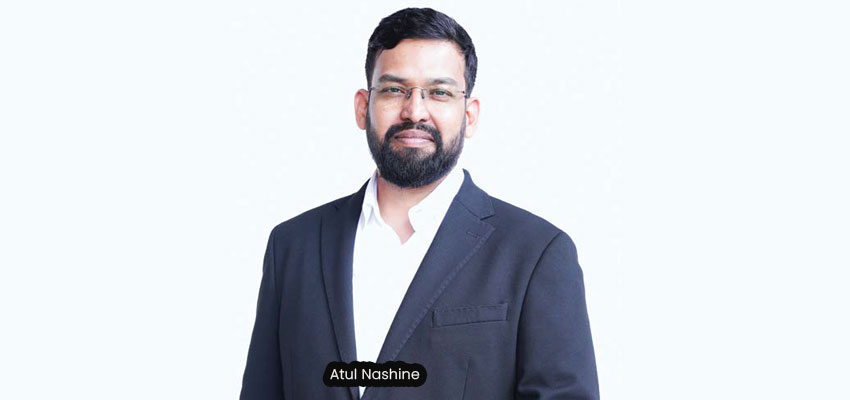
It wasn’t love at first sight, but something better and more beautiful. Over time, Atul Nashine, Director HR at Kantar India, fell deeply for Human Resources. What began as curiosity grew into a passion that shaped his journey and transformed workplaces. Today, he’s not just in HR, he’s in love with it. His career reflects how patience, purpose and people, can create magic. From nurturing talent to implementing strategies, Atul has made HR not just a profession, but a calling. Here is everything you ought to know about HR straight from Atul's journey and wisdom
Corporate Citizen: What often goes unnoticed is how beautifully HR bridges the gap between its organisation and employees. Do you agree with the bridge that HR connects between the organisation and its employees?
Atul Nashine: Absolutely, but I also believe that in today’s world, HR’s role goes far beyond just bridging a gap. When a company is working toward its goals, HR is the force that keeps the environment positive and the communication flowing, not just among employees, but across departments and with stakeholders too. More importantly, HR today is a strategic partner. It plays a key role in building organisational capabilities, driving revenue growth, and even contributing directly to profitability. From talent development to culture building, HR is present at every level. In short, HR isn’t just part of the organisation, it’s woven into its very fabric—HR is its heartbeat.
CC: On the flipside, there is a myth that HR is just there at the bottom adding no value to the company. What do you think of it?
While I don’t personally agree with the notion that HR is for namesake, I do understand where that perception comes from, especially from those outside the department. Many of my HR colleagues often say "You’re only needed when someone needs something". And, unfortunately in many organisations, HR remains largely invisible until there’s a problem to solve. But, I believe that’s where HR needs to take the lead. We must make a conscious effort to be visible, approachable, and accessible, not just during crises, but at every stage of the employee experience. And, while employees are certainly a key stakeholder, they’re not the only one. Leadership, investors, customers — they all look to HR to drive value in different ways.
Over my 19+ years in this profession, I’ve had the opportunity to contribute meaningfully across all of these groups. That’s where I’ve seen HRs truly shine, when it actively engages with all stakeholders and aligns itself with business goals. The impact HR can make is immense. It ultimately comes down to how individuals in HR choose to step up, and how open the leadership is, to involving HR as a strategic partner.
CC: Can you tell us about your educational background and how your professional journey took off?
I come from a very humble background, with my roots in Nagpur, Maharashtra. My father worked with the State Electricity Board, which gave me the opportunity to travel across different parts of Maharashtra and experience its diverse and rich culture.
I pursued my engineering degree in Computer Science from my hometown. After graduation, I started my career with a startup, which gave me a solid foundation and exposure to the dynamic side of business. Eventually, I decided to pursue management and joined the Indian Institute of Modern Management, in Pune.
From there, there’s been no looking back. I began my professional journey with Satyam, and over the years, I’ve been fortunate to grow, evolve and contribute, across various roles and organisations. It’s been an enriching ride so far.
CC: You’ve done your graduation in Computer Engineering. What made you shift into HR?

That’s one question I get asked quite often. I realised early on that working with computers felt like a monologue—you give a command, and it simply executes.
There’s precision, but not much human connection. HR, on the other hand, is deeply interactive. The people side of HR is what attracted me to it. It’s full of conversations, emotions, relationships and real impact.
That sense of connection and interaction really appealed to me.
But as I’ve grown in this field, I’ve come to understand that HR is much more than just interaction. It’s strategic, analytical and business-critical.
From driving organisational change to shaping culture, influencing leadership, and enabling growth, there's a lot of depth and complexity. And, that’s what keeps it exciting for me.
"Each misstep teaches you something new, whether it's about planning, communication, or simply being more present in the moment. That’s how you grow, not just as a professional, but as a person"
— Atul Nashine
CC: Now when you look back, can you connect the dots on why you wanted to pick HR?
Oh yes, absolutely. Steve Jobs said it best "You can't connect the dots looking forward; you can only connect them looking backwards". And, I truly believe in that. Life has a way of nudging you in the right direction, even if you don’t see it at the time. Looking back, I can see how every experience, every decision, even the detours, were leading me here. I’ve always believed in making the most of the opportunity in front of me. I might not know what this moment is building toward, but I have faith that, someday, it’ll all come together to help me create or contribute to something much bigger.
CC: That’s a thoughtful response on how you view your role. Moving on, when I say human resources, what kind of emotion does it evoke in you?
It evokes a lot of emotions, to be honest. HR practice started long back. And today, I think the scope of HR has changed so much. It is lot more than the words human and resources, it goes beyond that. I have been talking about adding value to stakeholders, and we do that in various ways. Human resources, I think is a very small term. It is just a piece of the work that we deliver today. We are actually there to ensure that business goals are achieved ethically. That’s what I believe my role is. We are the custodians of ethics in the organisation. At the same time, we are the ones who ensure that we deliver all the business goals to them. Where there is business there are people, and vice versa. People and business are interdependent—a symbiotic relationship in which each nurtures the other to ensure mutual success.
CC: What is the best corporate HR advice you have ever received?
The most valuable lesson I've learned is that a task isn't complete until it's finished. In HR, multitasking is constant, and projects remain ongoing until officially closed. I always remind my team that finishing what we start is essential for everyone.
CC: With technology, do you still think that you are able to add human to human resources?
Absolutely, and this is something I often talk about with people I meet. Technology, especially AI, is a game-changer. But it’s not the first time we’ve faced such a shift. Think back, when we moved from paper to computers, it was the first big revolution. Back then, too, there were anxiety raising questions, will jobs disappear? Will people become irrelevant? But that didn’t happen. Instead, we adapted, and computers became tools that enhanced our work. The same thing is happening now with AI. Yes, we need to adopt it, embrace it, and understand how to use it wisely. The technical nuances can be left to the experts. But as HR professionals and business leaders, we must learn how to leverage AI to improve decision-making, streamline processes, and make work more human-centric, not less.
Now the main question is, will technology replace people? I really doubt it. Technology can support us, it can enable us, but it can’t replace the empathy, intuition, and emotional intelligence that only humans bring to the table. That’s where the real value of HR lies, and that’s here to stay.
CC: In this day and age, how as an HR leader do you manage the Gen Z talent?
Honestly, I don’t think of them as Gen Z or Millennials. I just think of them as colleagues. The moment we start labelling people, we create unnecessary boundaries. At the end of the day, they’re team members, just like anyone else.
Yes, we may come from different generations, with different ways of thinking. But that doesn’t mean we need to treat them any differently. You don’t need to change people to work with them. Instead, focus on creating an environment where everyone, regardless of age or label, feels valued and empowered to do their best.
Once you shift your mindset to seeing them as individuals or team members and not as categories, it becomes a lot easier to connect, collaborate, and bring out the best in everyone.
"In today’s dynamic environment, upskilling is not just an advantage, it’s a necessity. Equipping employees for the future of work ensures the organisation remains agile and future-ready"
CC: How has HR helped you to become a better person?

It is great question which needs deep reflection. Most of the time, we are looking at things from one lens. But being part of the HR team, I have had an opportunity of viewing everything from multiple lenses. As an HR professional, I hear every stakeholder’s side of the story. I understand everybody’s requirements, their demands, their pain points and their aspirations, and their fears as well. That is one thing which is unique, and I think that is an experience which is spiritually quite elevating. The biggest thing here is to bring in balance, and that balance is something which makes the difference. The three D’s - dedication, determination and discipline, they will lead you on the right path. But, when you hear all these stories, that experience help you create win-win situations. As HR professional, I’ve learned that it’s never about choosing sides be it the employees, management, investors, or the clients, everyone plays a vital role. For me, navigating this balance is deeply enriching. I believe this is what truly shapes me into a better person.
CC: You’ve surely had your share of highs, but what about your goals, the ones you couldn’t achieve? How do you reflect on them, and what do you learn from those experiences?
We cannot achieve all our set goals, right? And honestly, there are many such examples. Sometimes, we take things all the way to 80 per cent, and then it doesn’t go through. That’s always hard, but also a big learning. I believe something isn’t a true lesson until you’ve completely gone through it, including the failure.
From a corporate standpoint there’s no fixed formula for managing budgets, handling finances, supporting leadership, or ensuring your team stays aligned. You keep learning, evolving and adapting.
What I’ve learned is - you need to pause and reflect. You must ask yourself, ‘What went wrong? What could I have done differently?’ That self-analysis is what helps you move forward. Mistakes are bound to happen, but the real growth comes when you’re honest with yourself and ensure that you don’t repeat them.
And yes, while I may not always share specific examples, the lessons are always there. Each misstep teaches you something new, whether it's about planning, communication, or simply being more present in the moment. That’s how you grow, not just as a professional, but as a person.
CC: When you're not working, what do you enjoy doing?
When I’m not working, I love spending time with my family and close friends. That’s my way of recharging. I used to be an avid reader, I still love reading, but with the traffic and long commute times, I don’t get as much time to sit down with a book anymore. Over the past couple of years, I’ve turned to audiobooks, and they’ve been a great supplement to my learning journey.
There’s no real replacement for reading a physical book, the experience is unique. But audiobooks help fill the gap. You’d be surprised how much time we spend in traffic or waiting around, and now I use that time to finish at least 12 or more audiobooks a year, sometimes even more. It’s a great way to keep learning without needing extra hours in the day.
"As HR professional, I’ve learned that it’s never about choosing sides be it the employees, management, investors or the clients, everyone plays a vital role. For me, navigating this balance is deeply enriching "
CC: What are the top five HR trends right now?
Tech trends are constantly reshaping our world, but AI has truly accelerated digital transformation across industries. In HR, every vertical, be it Talent Acquisition, HR Business Partners or Strategic HR, is exploring unique ways to adopt AI and is already witnessing promising results. It’s an evolving journey, with teams still discovering how best to integrate into their daily workflows.
Some trends, however, remain evergreen, employee engagement is one such pillar. I’m a strong advocate of Gallup Q12 questions on engagement. Every HR professional should be familiar with them and use them as a lifelong tool.
Another key trend is continuous learning. In today’s dynamic environment, upskilling is not just an advantage, it’s a necessity. Equipping employees for the future of work ensures the organisation remains agile and future-ready.
Change management is also critical. Supporting employees through the transition into an AI-enabled era is pivotal, not just for individual growth, but for overall organisational success.
Finally, strategic business alignment remains a top priority. Ensuring that HR initiatives directly contribute to business goals, is essential for HR to remain a true partner in growth.
CC: What’s one mantra for success?
It’s hard to define a single mantra for success, as success means different things to different people. But one thing remains constant—hard work. No matter the goal, consistent efforts are essential. Everyone must carve their own path, and it’s through dedication and perseverance that true success takes shape.
CC: Any advice for young professionals entering a career in HR?
When I began my journey, I believed HR was mostly about talking to people and solving their problems. But over time, I realised it's so much more than that. Today, HR is about listening more than talking, in fact, talking probably makes up just 10% of what we do. The rest is about listening, analysing, acting, understanding data and using it to make informed decisions. It’s about supporting leadership with insights, knowing your stakeholders, and aligning your work to meet their evolving needs. To all students and young professionals, I urge them to take note of this shift. Prepare yourselves not just to participate, but to thrive and make a meaningful impact in the world of HR.
CC: What’s your philosophy in life?
Whether it’s work, life or relationships, simplicity helps you stay grounded and focused. Keep it simple, always.