The Art of Building Consumer Trust
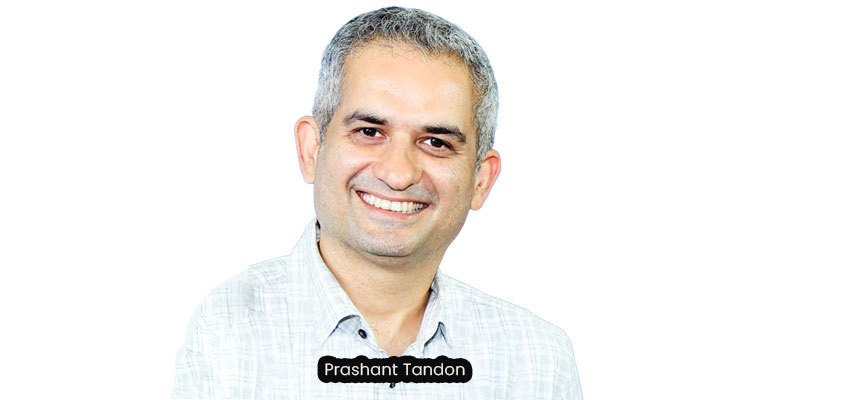
As one of India’s leading entrepreneurs in Indian Digital Healthcare since 2009, Prashant Tandon, co-founded and led, 1mg and HealthKart, both industrydefining companies in their space. Under his leadership as cofounder CEO, TATA 1mg (previously 1mg) has disrupted the standard model of healthcare delivery and grown to operate India’s largest online pharmacy, diagnostics and e-consultation platform. Recently at the fireside chat platform, held during the India Mobile Congress 2025, in New Delhi, he talked at length on the art of building consumer trust, with session moderator, Vineet Sagar, managing partner, Venture Garage. Corporate Citizen brings you excerpts from the chat
Vineet Sagar: How did you start thinking about building consumer trust—was it from day one, because you were operating in healthcare space, which is a very trust driven space or was it along the journey when you made mistakes, lost consumers and started reworking on it?
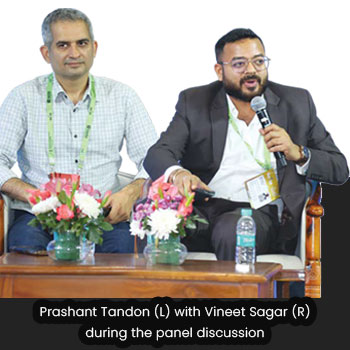
Prashant Tandon: In a business like ours—healthcare and many such sectors— from the beginning it is very cognizant of the fact that trust is the currency. Our business works only if our consumers trust us. In case of healthcare, all the companies that have endured and scaled well, at some level trust is the foundational element of that, not only in India, but across the world. What generates that trust is sometimes a fuzzy thing.
What is trust? What do people look for? We were very clear from the get-go that we will keep it simple—it is about putting the consumer first, doing what is right by the consumer. In fact, the basis of our company was patient centricity, and at that time when we started, it was something that was not the norm in healthcare. Healthcare ecosystems always believe that patients are the recipients, but it is either a hospital or doctor centric ecosystem. We felt that consumers are losing trust in this ecosystem, because they are not put at the centre. If we put the consumer at the centre, offer what is right for them and then live up to what we promise, that itself is good enough value to provide, and we just stick to that.
"At the end of the day, investors’ flavour of the month will keep changing, but your business will be seen by how efficiently you have used capital to build a business that can sustain. Investor is going to be very excited about that kind of business"
— Prashant Tandon
Q: While you were in this journey, there were certain things you projected and certain things you could not believe would happen. Will you share some experiences or experiments that you did, that worked or did not work?
If you want to build consumer trust then you must have a very long-term view, first of all of what is right and what is not. It is good business to build that because in a business like ours or all ecommerce business, the cost of acquisition of a customer is so high, and that typically makes or breaks businesses. And, if you do not retain those customers — once you can fool them in, but you cannot retain them if you are not able to fulfil the promise that you made. And then, you are anyway not bringing in that customer on one transaction, you need that lifetime value of that customer. It is good business, good economics, to not bring in more traffic and more customers, through promises that you cannot deliver on. It’s very easy to attract people with any kind of offer or if you know you can’t sustain them, then in the longterm you and me hurt our own business. I think learning has been very clear—promise what you can sustainably deliver. It’s alright if customers come a little slow, but let it compound. Compounding is the biggest driver of business growth.
Q: As a founder you must take decisions about where you want to build and how you want to build trust with your consumer. I know teams are answerable in terms of Key Performance Indicators (KPIs) that address consumer trust. How did this trickle down with your team?
Consumer metrics are always front and centre—every board meeting starts with our consumer metrics. What is the Make-to-Stock (MTS)? What is Customer Satisfaction (CSAT)? What is the error rate? What is the pitch rate? What did we promise, what did we deliver, and what did the consumers say to that? The good news about the world here is, the consumers do not shy away from giving you brutal feedback on what they like and what they don’t like. You get a lot of that feedback in real-time; you get a sense of that. Social media is full of comments, and it is up to you to read them for what it is worth—to distill them, to understand and get a feel of that. And, in our company that is at the centre of things. It must be the key metric. But, every time say, the business growth or the business fall, it is an output metric. The input metric is MTS and CSAT. So, be very clear about that—if that falls we are in panic mode, we must fix things, we must course correct. If that is on track, we are doing something right.
Q: In the healthcare sector, how important is data privacy?

In a sector like healthcare, if you are not taking care of data privacy, if you are not taking care of the basics, your consumers will not come to you. Because, as such it is very sensitive data — your medical condition, your diseases, your medicines, your blood test and so on. In sectors like healthcare and finance, we would though not want our bank to share with the world, how much money is being spent on what or where—these are personal sensitive information. So, as a business we go above and beyond—what is required. The law itself requires a lot of data privacy, data sanctity. But, much above that, if we do not have those systems then the consumers will definitely not trust their information with us.
"Learning has been very clear—promise what you can sustainably deliver. It’s alright if customers come a little slow, but let it compound. Compounding is the biggest driver of business growth"
Q: When you were interacting with your early investor, did they question you and measure you on trust? How were those conversations?
There are different levels of trust— number one is trust in the integrity and professionalism of the management team. For most good investors that is critically important. Fund raising is not a transactional activity—it's like a marriage—you are getting into a commitment with somebody you will have to spend the next 8-10 years at least, or more. You had better be in a situation where there is mutual understanding. And, all my fund raises have happened with those professional relationships building over a period. Much before the cheque came in. So, comfort over the integrity and discipline of the teams’ are stable takes.
Then, does your business actually generate trust and whether the investors ask or not? As I said, our first slide almost always is that our MTS is the best in the industry we operate, and we are proud of that, and we believe it is the one asset that matters. At the end of the day, given that we have kind of done reasonably alright, I think that’s the core metric that has played out as what works. Thankfully, we have always been lucky that we found investors who felt what we were putting in front of them, as the reason why our business will succeed. At the heart of it to me is—which always used to be—customer centricity, technology powered and operationally efficient businesses that we are building. It always starts with that, and customer centricity is the first word.
Q: Everybody knows you partnered with Tata, which comes with lot of trust. Since they joined hands with you, how has that trust aspect evolved and what are the learnings you got?
At the time of the deal also, as a company we had various possible rules of who we want to partner with. And, when the Tata Group came for conversation, it was something that I was immediately very excited and drawn to it, because my foundational belief was that in healthcare ‘trust’ is the currency. And, here is the most trusted group in the country, the brand that has stood for trust for more than 150 years—I would always wonder why Tata Group is not in healthcare, which is the sector that needs trust the most. When the conversation happened that they would like to enter in partnership—as a company they evaluated us as the one that does business today that aligns in values. To me it was an obvious yes—a brand like Tata with us—it helps the consumers get so much confidence that if it is the services provided by Tata Group, it will be fair, honest, transparent and good. That is something that we also believed in, and the Tata Group amplified it.
Q: Have you also seen a lot of change in your numbers in terms of customers acquisition cost going down because of partnering with Tata, or number of orders going up?
Yes, market share has more than doubled in all our categories—we have clear market rate in every category we play today. And, we are also able to deliver that in a profitable manner. Now that’s a massive shift that has happened. Our customer acquisition costs have always been low, which got further enhanced by a lot of brand pull that has come in. We also work with a bunch of companies within the Tata Group; that also helps our business grow faster. So, there are lot of benefits that you get being part of such a large organisation and a brand like that. Today the business does look very comfortably strong, from an economic perspective.
Q: What are some key takeaways or certain aspects that you can give, as a founder with limited capital?
The most important thing is that limited capital is very well appreciated, but use it very judiciously. Judicious use of capital means you spend it only on customers that you can genuinely retain. For that, do not over promise, because getting traffic, getting Gross Merchandise Value (GMV), getting a customer for one transaction, is going to drain your business and not help your business. So, promise what you can deliver, if that means you will get slightly few customers, then use your money to serve those few customers right now; next let the retention happen, let things compound, before you set yourself up for greater scale. Because, at the end of the day, investors’ flavour of the month will keep changing, but your business will be seen by how efficiently you have used capital to build a business that can sustain. Investor is going to be very excited about that kind of business. They would want to see retention, so use your money very wisely, grow with customers that you can retain who you can serve.
Q: Touch us on certain personal landscapes—when you wanted to become an entrepreneur, did you get all the support from the family or were there certain aspects that you needed to convince them? How did that evolve for you and how as an entrepreneur you can handle these things?
Interestingly, in my entire family and extended family, nobody had ever done business. All were professionals, engineers, doctors, architects and everything else, but no one did any business or entrepreneurship in our family history, as I know.
It was a new thing for everyone. I came to startup after spending four years in the US, where I was working with McKinsey & Company, which was doing healthcare consulting.
So, when I came back to India at that point, honestly it was super easy— my parents were more than happy just to have me back in India. So, from a family perspective it was just lot of happiness and support.
"The good news about the world here is, the consumers do not shy away from giving you brutal feedback on what they like and what they don’t like. You get a lot of that feedback in real-time; you get a sense of that... It is up to you to read them for what it is worth"
Q: Cofounder chemistry—there is a lot of trust involved in that aspect as well. How as cofounder you chose that this is the person I want to trust and deal with? How do you keep maintaining that?
Sameer Maheshwari and I came back together from the US and built Healthkart together. And now 1mg with Gaurav Agarwal. Having the right cofounder is the single most important determinant of success. Starting with first phase—we came from the US and we had a different plan. We landed on Healthkart after some time, but tried a lot of things that did not work. The early stages of our startup journey are very turbulent. You get a lot of times, when you feel, you are just going in circles, this is going nowhere. Maybe we should shut this down, maybe get a job. Am I wasting my time and money? Through those phases of self-doubt, having the right cofounder is absolutely critical. When you are down that person pulls you up and if that person is down, you pull him up.
The second thing is, you also need somebody with whom you can transparently talk to, about what is going on. It is lonely otherwise. Because, in front of your customers, teams and investors, everything is always super awesome, hunky-dory, future is bright. It’s good to have someone you can share with, and having the right partner is very important. And, also important is having the aligned complimentary skill sets and having a similar value system. Philosophical alignment and values alignment, is the most critical thing.
Q: Working as a cofounder, how do you resolve conflicts and how do you keep moving together as a team?
We both are passionate about it and philosophically both want to do the same thing. Still sometimes one will have a different view. So, the way we have resolved it with both the companies, is with clear delineation of work, and that is often an important conversation to have. And, another related part to that is the decisionmaking framework—what kind of decisions will be made, and who being the primary decision maker. So, you have to have that conversation openly upfront that is in this kind of a situation—at the end of the day the final word will be yours. And, as long as you have that transparently, and as you approach it on a regular basis—obviously has to be respectful and with that approach of ensuring that you can take care of each other.