Coexistence and Conflict

In recent months, leopard sightings across urban and semiurban pockets, have reignited debates around human-wildlife conflict in rapidly urbanising landscapes, raising questions about safety, coexistence and ecological balance. To understand the dynamics behind these encounters, Corporate Citizen spoke with Dr. Vidya Athreya, one of India’s foremost wildlife biologists, whose work has focused extensively on large carnivores, their behaviour, and their interactions with human-dominated environments. This conversation offers a rare window into the complexities of managing wildlife in India’s fast-changing urban spaces
Corporate Citizen: Pune and other urban areas across the country have recently seen repeated leopard sightings. Based on your research, what ecological or human-driven factors might be causing this increase in urban leopard movement?
Dr. Vidya Athreya: This is not a new phenomenon. We have seen leopards in these areas even 20 years ago. Ever since the drought prone areas have had full-time irrigation and full-time crops, they have provided habitat for the wild animals, while abundant domestic animals provide prey for them. Even hyaenas and wolves occur in human-use landscapes, but it is only leopards that come into trap cages because they are cats, and cats like boxes, whereas it is impossible to get hyaenas and wolves into cages.
CC: India has a long history of leopards living outside protected forests. How do you interpret this coexistence in the context of today’s rapidly urbanising landscapes?
The crux is that we (media, politicians and the general public) always raise this issue close to elections and then it is forgotten, leading to increased frustration the next time around. Mumbai used to have 30 attacks on people by leopards 20 years back, and now it is rare even though we have the highest density of leopards and people sharing space.
This is because, in 2011, in peacetime, when there were no elections around the corner, the forest department along with citizens, media and volunteers, started the project “Living with Leopards” because everyone recognised that the arbitrary capture of leopards due to public and political pressure was causing the problem. This is because, leopards which otherwise stay away from humans, are caught and released in areas they don’t know about, and then human attacks are imminent. The capture eventually leads to increased attacks on humans. This is like a typical chicken-and-egg situation. By taking precautions and decreasing capture, leopards avoid humans and there is very low conflict. Now, this is complex and not a simple solution, but very much doable with political help.
CC: Is the current pattern in Pune an anomaly or part of a larger national trend of large carnivores exploring human-dominated spaces?
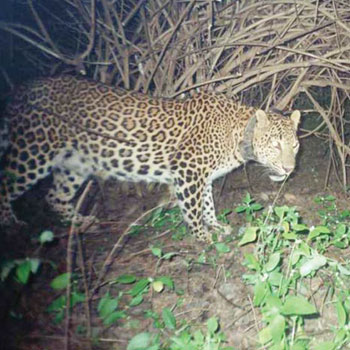
India, where people and wildlife have long-standing relationships with one another, is something that is increasingly rare anywhere else on the planet. A striking example is the institution of ‘Waghoba’, the big-cat deity revered by many communities across southern and central India, including in Maharashtra. Our work with the Warlis (an indigenous Adivasi tribe whose culture is deeply connected to nature and who are known for their traditional folk art) in Dahanu mapped more than 130 Waghoba shrines, and the community religiously celebrated Wagh Baras, seeking protection from the real wagh as well as from other natural disasters, and asking for blessings. The communities also carried deep traditional knowledge about the real wagh— tigers and leopards.
A similar relationship exists in Sanjay Gandhi National Park, Borivali, where the Warli community living inside the park, find leopards walking past their open doors, which is a completely normal occurrence. So, we need to recognise that the amplification of conflict is very much a media-driven issue, and the tragedy is that such amplification threatens to erase these positive relationships—something far older than human societies themselves, because these animals were here long before humans built any form of societies.
"Youth partners could play a transformative role in easing human-leopard tensions, acting as mediators, educators and guides, ensuring that coexistence becomes a practical reality rather than just an ideal"
— Dr. Vidya Athreya
CC: There is public fear about attacks. Based on behavioural data, how do leopards typically respond to human presence, and what are the misconceptions that need urgent correction ?
The fear is extremely real, and in Junnar, when there were a large number of attacks on humans two decades ago, we found that it was correlated to release of leopards in adjoining forests such as Bhimashankar and Malshej Ghats. The worst thing to do is to capture arbitrarily and then release them elsewhere because it removes them from their home and releases a very stressed animal in a new place, where it does not know where to hunt or find refuge. Contrary to common belief, the solution is to decrease captures so that releases decrease and therefore human attacks decrease.
For example, if a leopard has only been seen and is captured, it could be a mother leopard who has young, inexperienced cubs who may not know how to hunt, and then a small child is an easy target. On the other hand, if a leopard has killed a person and has been captured, it should never be released because it will continue to attack people near the site of release. One must recognise that public and political pressure only worsens how this issue can be managed.
CC: What, according to you, are the biggest gaps in current conflict-response protocols—especially in urban or semiurban zones like Pune? Please elaborate on your Junnar Pilot Project too.
I believe the problem cannot be dealt with by the forest department alone, as many other departments and stakeholders directly influence the issue. For any meaningful solution, the panchayat must be actively involved, since they are closest to the local communities and understand the social dynamics and challenges on the ground. Equally important is the engagement of local youth—both boys and girls—who can become active partners in conservation efforts, spreading awareness and helping implement preventive measures.
The police play a role in ensuring law and order during conflict situations, while the revenue department can help with land-use planning and managing human-wildlife interfaces. The media also has a crucial role in shaping public perception, preventing misinformation, and highlighting positive practices rather than amplifying fear. Without this collaborative approach, efforts will remain fragmented, and the cycle of conflict and fear will continue.
Junnar Pilot Project: Collared leopards Sanjay Gandhi National Park officials and I had initiated a project to study the big cat using radio collars. The project involved GPS telemetry where radio collars that communicate via satellite are placed on leopards to monitor their movement. The plan was conceived in 2016, but obtaining state and central permissions, raising funds for radio collars (each costs Rs 5 lakh) and the lockdown, delayed the project.
This study helped the forest department answer questions like their land use pattern, their movement across roads with busy traffic and how they avoid humans. In all, five leopards were studied as part of the project that was carried out in two phases. The monitoring involved physically visiting sites where the transmitter showed the leopards movements.
CC: What short-term actions can any forest department implement to prevent panic and reduce encounters?
In the short term, a key step would be to train young volunteers from the villages—both boys and girls. These trained youth could serve as first responders for any leopard-related issues, helping to manage situations calmly and efficiently on the ground. Their presence would not only provide immediate assistance but also build trust between the community and authorities.
Involving local youth in this way would empower them, create a sense of ownership, and reduce fear and panic during conflict situations. Over time, these youth partners could play a transformative role in easing human-leopard tensions, acting as mediators, educators and guides, ensuring that coexistence becomes a practical reality rather than just an idea.
"India, where people and wildlife have long-standing relationships with one another, is something that is increasingly rare anywhere else on the planet"
CC: What long-term, policy-level changes would you recommend for cities that are expanding rapidly into wildlife habitats?
Again, this entire initiative should be placed under the supervision of the guardian minister of the district, who needs to take a proactive and sustained interest for such a complex issue to be effectively addressed. Human-wildlife conflict, particularly involving leopards, is not a problem that can be solved by one department alone; it spans multiple landscapes, communities and administrative jurisdictions, and therefore requires strong political guidance and co-ordination.
Active involvement from the guardian minister would ensure that resources are allocated efficiently, inter-departmental coordination is streamlined, and local communities are engaged in a meaningful way. Political support is particularly crucial in sustaining long-term solutions, as this issue cannot be resolved overnight, and requires consistent monitoring, intervention and adaptation, across large and often challenging terrains.
CC: Tell us about the Marathi movie Ajoba and mention your experience about it.

The Marathi film Ajoba, directed by Sujay Dahake, released in 2014, was based on a leopard’s journey from Malshej Ghat to Sanjay Gandhi National Park, Borivali. The renowned Bollywood actress Urmila Matondkar played the lead role, portraying me as the wildlife biologist at the centre of this journey.
I had collared that leopard, rescued in Junnar in 2009. The story was inspired from the true events of a leopard's remarkable 29 days journey. The leopard Ajoba was rescued from a well and a tracking device was fixed on his neck, before being released back into the wild. He made his way to Mumbai over the Sahyadris, a distance of 120 kilometres. The film explored the ever-increasing human– animal conflict and shed lights on various issues related to wildlife conservation. I watched the movie, and the entire experience was captured incredibly well.
CC: How important is the role of media in shaping narratives around leopard sightings? What can journalists do better when reporting such incidents?
Our work in Mumbai found that the media is an extremely important player in how this issue is dealt with. More commonly, the flames are fanned, creating extreme pressure and leading to the capture of leopards that have not done anything; resulting in their release and more human attacks. It was the same in Mumbai; however, we worked with the Mumbai Press Club and Mumbai Marathi Patrakar Sangh in 2012, and it proved to be the most powerful intervention, because a sensitive media can actually reduce conflict by pressuring the administration to take actions that genuinely reduce conflict and attacks.
To me, positive media engagement is extremely powerful and fruitful and should be pursued. Also, these territorial forest divisions are vast, and NGOs or the forest department are not capable of dealing with this issue alone. Ideally, the guardian minister needs to have revenue department, forest department, police, village panchayats, and media under one umbrella to deal with this issue effectively.