The Grammarian of the Digital Age

Dr. Bilel Jamoussi on why India’s scale will define the rules of our connected world
The air at this year’s India Mobile Congress (IMC) was thick with more than just Delhi’s humidity; it was charged with a palpable sense of ambition. Here was a nation no longer content with catching up—it was now intent on leading. Watching this transformation with a keen, professional eye was Dr. Bilel Jamoussi, Deputy Director of the International Telecommunication Union’s (ITU) Telecommunication Standardization Bureau, a man who operates as one of the invisible architects of our connected world. He captures the event's spirit, noting, “I’ve seen countries dream of digital revolutions, but in India, it feels tangible—the scale, the intent, the pace is simply unmatched.”
If the global tech stage requires meticulous stage management to ensure every element works in harmony, Jamoussi is a key director behind the curtains. His role at the ITU, the UN’s specialised agency for telecoms, places him at the heart of writing the global standards that dictate how networks communicate, devices interact, and billions of people connect seamlessly across borders. A Tunisia-born engineer with a doctorate from The Pennsylvania State University and a 15-year tenure at Nortel Networks where he earned 22 US patents, Jamoussi brings a rare blend of technical precision and diplomatic patience to the table. He cuts to the heart of his work, stating, “Standards aren’t glamorous, but they are what make innovation scale; without interoperability, technology swiftly descends into chaos.”
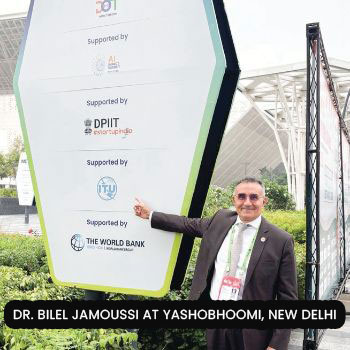
At the IMC 2025, Jamoussi found himself in the midst of a powerful momentum. He observes a significant shift, explaining, “India is evolving from a consumer of standards to a co-creator, and that represents a huge strategic shift.” The congress was a showcase of national intent, from home-grown 6G testbeds to the relentless push of the BharatNet Project. For Jamoussi, the conversation has moved beyond a simplistic race to the next ‘G’. He insists, “The next generation of networks must be sustainable, energy-efficient and profoundly accessible; it’s not merely about connecting everyone, it’s about making that connection meaningful.” This philosophy drives his work at the ITU, where he champions embedding sustainability into the very DNA of emerging telecom standards. He sees India's influence as pivotal, noting, “India’s immense scale gives it tremendous leverage; if its companies begin demanding greener, cheaper and more inclusive technology, the global market will have no choice but to follow.”
This is where Jamoussi’s unique value shines—his dual fluency in the languages of engineering and diplomacy. In closeddoor sessions, he is known for his ability to transform heated debates into pragmatic, consensus-driven outcomes. He believes, “You can’t dictate a standard; you build it through trust, and that kind of trust takes years to cultivate.” Under his stewardship, the ITU’s study groups have actively opened their doors to smaller nations and innovative industries, a move he sees as fundamental progress. “When a startup from Nairobi or Pune finds itself sitting next to a global telecoms giant at the same table, that’s how you genuinely democratise technology,” he affirms.
So, what was his overriding takeaway from the spectacle of the IMC? “Optimism,” he says, the word simple yet weighty. “India reminds the world that technology can still be a powerful force for inclusion.” He recalls a live telemedicine demonstration that crystallised this belief, where a doctor in Delhi consulted a patient in rural Assam over a crystal-clear 5G link. “That single moment said everything— the true value of connectivity isn’t measured in gigabits; it’s measured in improved lives.”
As the world charges headlong into the era of 6G and AI-integrated networks, Jamoussi’s philosophy remains refreshingly grounded. His approach is a humanist one, shaped by decades of building bridges between nations and networks. He concludes, “The internet’s next chapter will depend entirely on how thoughtfully we write its grammar today.” Dr. Jamoussi may not trend on social media, but every time your device connects seamlessly across a continent, you’re following a path he helped to design. In a digital world obsessed with speed, his work is a potent reminder that the most important race is the one for harmony—and India, he believes, is now running it with formidable purpose.