The 'S for School' Mission
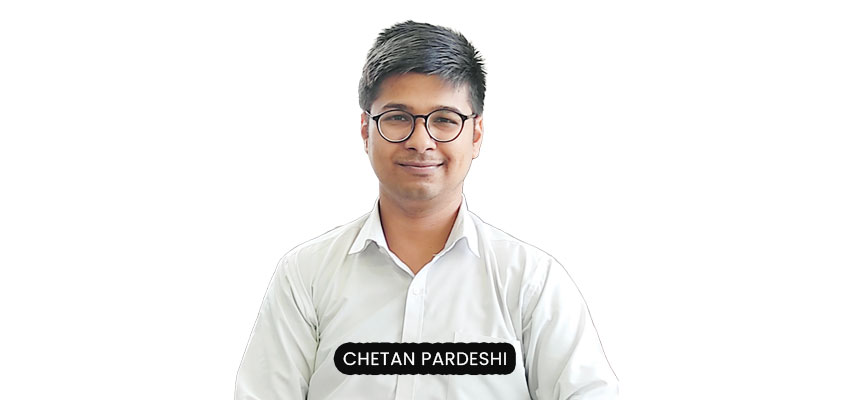
Director of The Experiential Events and Marketing, Chetan Pardeshi, has created a sustainable model that delivers accessible education across rural Maharashtra, bridging the literacy divide. His "S for Schools" initiative deploys smart resource management via mobile libraries and mobilises volunteers, without requiring massive funding
"Physical books have broader reach. In areas where electricity is unreliable and internet connection is spotty, a book remains accessible, democratic and powerful"
Just as "A is for Aircraft" inspires aspiring pilots, "S for Schools" symbolises infinite possibilities to unlock latent potential among rural children, believes Chetan Pardeshi. The initiative positively impacts rural education through joint efforts with local schools.
He remembers discovering his life's purpose as an eleventh-grader while volunteering with NGOs, witnessing firsthand how education could transform lives in rural communities. "That early spark grew into S for Schools, an initiative that has brought libraries and mentorship to over 150 rural schools across Maharashtra, touching thousands of children who might otherwise never have discovered the joy of reading beyond their curriculum," he says.
As a company director, Chetan applies systematic business principles to grow his enterprise. But, his heart lies in the mobile library initiative that rotates through village schools, each carefully packed with storybooks, biographies, and educational materials that bridge the literacy gap.
The birth of a vision
The path to S for Schools began during Chetan's college years. "By the time I completed my engineering degree in 2017, I had already worked with over 10 organisations through fellowships and volunteer programmes. Each experience reinforced my belief that education is the key to lifting people from poverty," he says.
However, he noticed something troubling. While city children had access to libraries, bookstores, and English-language resources, students in Marathi and regional language schools often struggled with English. The children feared the language that increasingly dominates higher education and professional opportunities. This linguistic divide created an invisible barrier, limiting opportunities before these children could pursue their dreams.
Pillars of change
S for Schools operates through distinct programmes addressing specific challenges in rural education. "The mobile library programme remains the primary initiative, carefully curated to match each school's enrolment size," he says. The "Meet the Mentor" initiative brings professionals from diverse fields — IT specialists, engineers, doctors, designers, and managers, who engage directly with students in village classrooms, expanding horizons and revealing career paths they never knew existed.
Libraries on the move
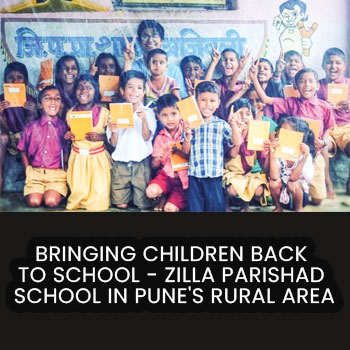
Donors contribute books spanning multiple genres: adventure stories, mythology, biographies of freedom fighters, and non-fiction works that satisfy curious young minds. Collections arrive at schools for six-month cycles, opening remarkable possibilities for students.
On the opening day, students participate in an essay writing competition that serves as a baseline assessment of their writing skills and vocabulary. For six months, the library becomes part of daily school life. During breaks and study periods, students browse shelves, selecting books that catch their interest. As they read, they encounter unfamiliar words and concepts. Teachers help students understand how to use new vocabulary in contextually appropriate sentences, making learning organic and woven into the natural rhythm of reading and discovery. After six months, students write another essay. The improvement is often striking, as children develop richer vocabulary, more sophisticated sentence structures, and greater confidence in expressing ideas. The library then moves to its next destination, and a fresh collection arrives, ensuring no student receives repeated content.
Chetan hopes to replicate the model across other Indian states, depending on building sufficient volunteer capacity. While he embraces available technology— digital boards and educational videos—Chetan believes, "Physical books have broader reach. In areas where electricity is unreliable and internet connection is spotty, a book remains accessible, democratic and powerful."
Sustainable system

The book rotation system makes the programme sustainable. Instead of requiring constant funding for new books at every school, Chetan created a circular model where resources move between institutions, maximising impact and minimising costs. To date, the initiative has served over 150 schools, conducted mentoring sessions across more than 75 classes, and engaged over 2,000 volunteers. His entrepreneurial acumen translates to conducting personal audits of programme parameters and interviewing rural school teachers. "I understand local needs before coordinating with donors and volunteers, also managing transportation logistics that ensure books reach the remotest villages," he says.
Overcoming obstacles
The path has not been smooth. In the early days, recruiting volunteers proved difficult. The policy of accepting only book donations, not cash, created ongoing challenges. Transportation presented another hurdle. Reaching remote rural areas without adequate funding for volunteer travel remains a constant struggle. Roads may be poor, distances vast, and coordination complex, but Chetan's determination to bridge the educational gap remains undented.
His most heartbreaking challenge is seasonal student dropouts. In areas like Igatpuri and Nashik, dropout rates increase during harvest and plantation seasons. When rural families need extra hands in the fields, education takes a backseat. Chetan and his team have adapted strategies based on geographical and seasonal patterns. "We are working continuously to bring children back to classrooms with sustained effort and sensitivity," he says.
Recognition and reality
Chetan's work has earned significant recognition. Yet he maintains a pragmatic perspective that honours do not necessarily translate into increased government cooperation or easier access to decision-makers. "What matters more is the tangible impact on the student who discovers a love for reading, the teenager who realises college might be possible, and the community that sees education as a pathway rather than a luxury," he says.
"I understand local needs before coordinating with donors and volunteers, also managing transportation logistics that ensure books reach the remotest villages"
Mission forward
While the elderly in rural areas, as Chetan says, have missed out on formal education, his goal is to transform rural children into future citizens, capable of making informed decisions about their leaders, their communities, and their futures.