New-Age Poet who performs
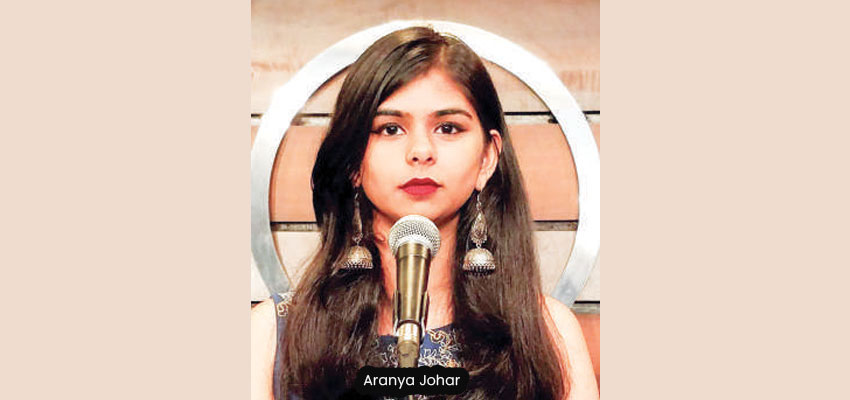
She takes the stage, microphone in hand. "Pretty girls, they say, good for the eyes but pretty girls pretty 'cause of their minds" she raps. The crowd cheers, hanging onto each word. Aranya Johar, the 27-year-old from Mumbai is a new-age poet. You see, she performs poetry instead of publishing it
I love having a unique name. Good luck finding another Aranya,” she tells the crowd full of bright young things assembled to hear her. They just love her.
If India’s Gen Z had a literary face, she would be it. Just like her generation, she is all about being online, in the moment, and yes, 'speaking her truth' instead of writing it.
Listening in, it isn’t hard to figure out her popularity. It's slam poetry - raw, culturally Desi and political. Her videos go viral because she articulates the things everyone thinks about but won't say out loud. She's bringing a new kind of poetry to her generation, one that lives on Instagram and YouTube, rather than the pages of a book.
Unfair but unmistakable

Born on 7 September, 1998, raised in Mumbai, Aranya attended Lilavatibai Podar High School, before the poetry circuit swallowed her whole.
The expressive bug hit early: she started writing at the age of 11 and performing at 13. Take away the rap cadence and its poetry. Feminist poetry, actually.
One look at her Instagram, and you are instantly drawn in. There are sticky notes plastered on walls; behind-the-scenes clips of her writing process. Then there are videos showing how ideas metamorphose into performances. She's relatable without trying too hard.
Her performance at the UnErase Poetry Event on International Women’s Day in 2017 to A Brown Girl's Guide to Gender, hit 1 million views within two days. The rawness of it detonated across social media: from marital rape to acid attacks, slut-shaming, and all the double standards women swallow.
But, gender and male privilege are not her only target. "I am a brown girl," she says, “but I am more than my rang.”
Poignantly enough, in the work A Brown Girl's Guide to Beauty, she admits to slapping fairness creams on her face since the age of nine. Every face wash, she says, felt like punishment for having skin society called ugly. She talks about slathering layer after layer of Haldi on her face, “Desperate to be anything but brown, anything but dark.”
Indian magazines put light-skinned women on covers and call it representation. But Aranya is having none of it. "Forget Snow White, say hello to chocolate brown. I'll write my own fairytale,” she states and the girls applaud.
The big moves

Interestingly, she was one of the first poets to integrate spoken words into Bollywood, when she collaborated with Akshay Kumar for the movie Padman. Her video To Bleed Without Violence, which she created with WASH United, got 7 million views in one weekend.
In March 2019, she received an invitation to the G7 Gender Equality Advisory Council and found herself in rooms with Emma Watson and French President Emmanuel Macron. Rolling Stone and Harper's Bazaar both ran features on her in 2017, and the BBC included her on their 100 Most Inspiring Women list.
She also curates’ blind poetry sessions, which are basically poetry nights held in complete darkness, where poets perform without anyone knowing who they are.
The audience can't make judgments based on how someone looks or how old they are because they can't see a thing, which means the only thing that matters is the words themselves.
The new-age feminist
Aranya's brand of feminism doesn't tell you what to think or how to feel about things. It's sharp and sometimes funny, and it seems comfortable existing exactly as it is. On a more serious note, she has also received death threats right alongside the praise and support given how her takedowns of the patriarchy.
But, the Johar juggernaut is only starting to roll.