India’s Telecom Manufacturing Boom: Driving innovation, exports and digital sovereignty

We continue with the panel discussion featured in the February 2026 issue, from the recently held India Mobile Congress 2025, New Delhi. In the second part of the session, experts from across the industry conversed further about how India’s telecom evolution is helping to make India a global leader in telecom innovation and manufacturing, exports and digital sovereignty, and what's coming up next. Corporate Citizen brings you the excerpts
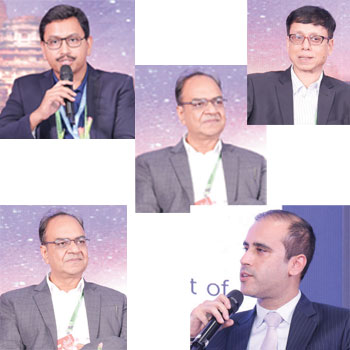
Panellists (L-R):
- Gourab Basu, Vice President - Business Development, VVDN Technologies
- Prashant Jain, Director Public Policy and Government Affairs, Tejas Networks
- Prithwish Paul, Director - Wireless Product, Prose Technologies
- Rajeev Saraf, CEO, Lepton Software Export and Research (P) Ltd.
- Puneet Handa, Executive Officer and Division Head for Product and Strategy, Rakuten Mobile, Inc.
- Avinash Ramachandra, Executive Director - Corporate Affairs, KPMG (Moderator)
Avinash Ramachandra: How can we use this momentum and the platform we’ve built to influence how things move forward? What is the current state of manufacturing in India?
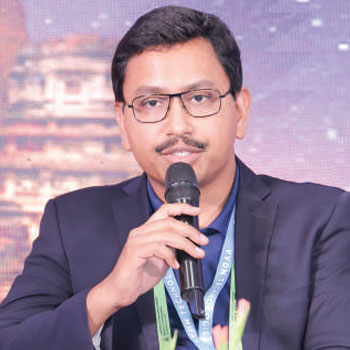
Gourab Basu: From our perspective, manufacturing in India is picking up real. It’s no longer just about final assembly or checking the box on manufacturing. We are evolving with more value edition in the manufacturing chain. This growth is driven by engineering, software ecosystem, engineering ecosystem as well as component ecosystem that are coming into India, slowly and steadily. Of course, as enterprises, as entrepreneurs and as people, we want things to be faster than they are, but the progress is real. It reflects in the skill development programmes, the amount of industrialisation that is taking place, and also the attention that we are getting today from the component ecosystem.
In terms of measurement, the number of factories is the front indicator but also the skill sets that are coming in, that is also matching the industry requirements. So, it’s a steady growth, but the growth nevertheless is attracting Original Equipment Manufacturer (OEMs) and Original Design Manufacturer (ODMs) from overseas and giving them confidence that high tech, high-quality manufacturing for telecom, is definitely possible.
Q: So, I would assume that the Electronics Component Manufacturing Scheme (ECMS) has had some role to play in this progress. So how do we sustain that progress and growth?
Prashant Jain: When we talk about telecom equipments, there are three major components to the telecom product to sustain this growth. One is the rear components—semiconductors required for the Engineering Change (EC), and the scale is building up. Second is, we would need people for the ECMS—for the companies who will handle manufacturing for that telecom equipment.
The third important aspect is the design. If we talk about any telecom equipment, there are two parts of the design. One is the hardware design—how you will be doing the Printed Circuit Board (PCB) layer designing of the telecom equipment at the PCB level. Second is the software. When we talk about all these telecom equipment products, India has achieved huge success in IT and software. But, the bad part is we have never been creating our own Intellectual Property Rights (IPRs) or patents for such type of telecom products. So, now we have to look at packaging and creating IPRs out of India.
"India is in an interesting position right now. We are becoming good learners, good observ ers, good participants in partnerships and collaborations, to keep accelerating and keep going to the next levels"
— Gourab Basu
Q: That’s a key point—bringing more value into the chain. So, Prithwish, how can India move up the telecom value chain? Your experience will help us in understanding that part.
Prithwish Paul: As we look at the entire ecosystem today, semiconductor is the key for which the semiconductor machine in India is already on and we can start seeing the chips coming out in a few years. Unfortunately, this industry has a slightly longer gestation period. Suppose if I want to build a 2 angstrom chip today—which Intel is trying to do—that won't happen overnight, it will take some time. In India, we cannot expect things to change overnight, and investments must come in. But, the good part is that some of the schemes which have been brought in by the government like PM-SETU Scheme, will be training the manpower. So, the manpower also needs to be aligned to support the entire industry. The response to ECMS primary has been really very good.
Q: Speaking of innovation, I want you (Rajeev) to share your perspective on how that whole chunk of startups and mid-level companies can get into this sector and start contributing effectively.
Rajeev Saraf: Whenever people talk about telecom manufacturing, the thought process is always around hardware. Nobody really thinks so much of software. But, if you look at any network, the Operations Support Systems (OSS) and the Business Support Systems (BSS), collectively they are like brain of the whole network. They make the network run, managing and building everything.
Government focuses a lot on telecommunication and manufacturing in India. Schemes such as Production Linked Incentive (PLI) schemes are more geared towards the hardware. The government should severely look at it because at the end of the day all the hardware is being managed through software. That's where I think it's very important to have your internet protocol in the country. We must have more PLI or R&D projects around the software step. Another thing is making the software mandatory as a part of the Make in India. The government entities should participate in buying the ‘Make in India’ products. I think these two initiatives will really help us grow
"To get to a 6G equipment, we are not less than 4-5 years away and we need to fund it for next 5 years. Unless we get some grants from the government, it is very difficult for the Indian companies to sustain that R&D for this technology "
— Prashant Jain
Q: It is important for India to take the lead into the next level. Global partnerships is one area which will change the game, to a large extent. So Puneet, how do we go about getting more global partnerships into India, specifically for developing software, IPR creation and manufacturing?
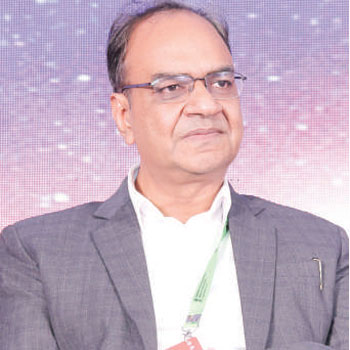
Puneet Handa: Talking specifically on global partnership, we have already seen this in action, whether it is Foxconn, Excel, Ericsson, NVIDIA; they just build indigenous product with blending international hardware and Indian software. I think it's already proven that how global partnership can scale, but there are fundamentals to it. First is, every time we do a joint partnership or a global venture, it is easy to acquire the technology. You don't have to build everything from scratch. Second important factor which plays here is, this partnership brings a lot of investment. With investment, there is a lot of job creation and job retention in India—which is a need of the hour, based on how the geopolitical situation is. So how do you retain the talent till the time you don't bring that level of competency, technology, stack, all put together? But, having said that India should not only focus on contract manufacturing or time and material, but they should focus on co ownership, co-IP development. Make in India has to transform to make and innovate in India.
Q: Rajeev, what should India do to compete against these telecom manufacturing labs?
Rajeev Saraf: I primarily can talk more about the software. I think one great thing is that the scale that India gives, other than China, no other countries gives. India provides you the kind of scale that once you build a product here, then you can scale it anywhere in the world. To build that product, you require support from the government, but I have also seen that it requires a lot more support from the private sector. Some of the telecommunication companies in India now are moving outside India. So, I think the government should bring together the private sector and the government sector, and they should push them to start adopting more of internal Indian internet protocol, and that's how I think the whole sector will grow. The talent is there, the products are there, we just need the big telecommunication companies to adopt them and take it forward.
"We are making a lot of improvements, especially on the software part...If you look at the government, they have been bringing up multiple schemes like the ECMS and RDI"
— Prithwish Paul
Q: From the hardware side, what vision do you (Gourab) have and how can India compete?
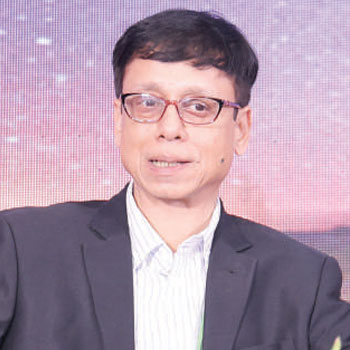
Gourab Basu: India is in an interesting position right now, where we as a country cannot slow down tech adoption. We cannot slow down being in cutting edge of our implementation of the telecom networks or defence systems, at all, while the Indian homegrown enterprises—IP, hardware, software— must run its own cycle of development, quality, validation, deployment and field testing. A lot of our India infrastructure contracts need to be field deployed to a certain extent. And so, we cannot shut our doors for outside; this is something which is known to the global OEMs as well.
We always have leeway in the way our Indian contracts are structured. If it is not available in India, we have to go to a global OEM. So rather than competing, we are trying to wiggle ourselves into a space there. We are trying to forge partnerships with ODMs in Taiwan. We have tried to create partnerships, and we are working one level below, even with the ODMs. So, that is how we are navigating—we are also becoming good learners, good observers, good participants in partnerships and collaborations, to keep accelerating and keep going to the next levels.
"You cannot look at what you're consuming today. You must have that futuristic mind set...What we can do is start investing more into the futuristic technologies "
— Rajeev Saraf
Q: I just want to understand from you (Prashant) that all of this is coming from the private sector as well. They are doing their thing and moving forward. But, I think there is a lot that the government can also do to give a platform and push this forward, enable some of these things to happen. How can we move a little faster?
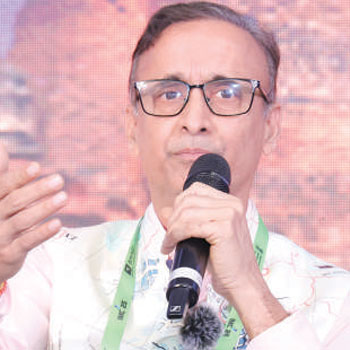
Prashant Jain: For any telecom OEM or company to be successful, there are two important aspects to look at. One, for any company to sustain, biggest important step is the getting market access. And, for that I think we need some sort of handholding from the government for at least some time, because telecom equipment industry is new to India.
So the first thing, as Ministry of External Affairs, we have been doing lot of G2G within various countries and till date we have been doing only construction of bridges, roads, hospitals or even railway lines and other such things. And of course, we have now success stories from BharatNet and rural broadband, we have success stories of 4G, and now we are getting to 5G. So, what we feel is, if government can announce some sort of Line of Credit (LoCs) or grants for Indian companies, that would be a boon for the industry. Government is now receptive, and I think we will see some results happening very soon in this line.
Second important step to support the domestic industry market access, is the preference to Make in India and PMI Scheme. Why can’t we align this with private operator as well and start giving them some incentive. I mean that will help them out to look after the domestic OEM, and the market will also excel.
Another thing is that Indian companies also need handholding for some more time in R&D. The Research, Development and Innovation (RDI) Scheme is a big welcome. To get to a 6G equipment, we are not less than 4-5 years away and we need to fund it for next 5 years. Unless we get some soft loans, some grants from the government, it is very difficult for the Indian companies to sustain that R&D for this technology
Lastly, to sustain we need to be very active in participating in making more of patents within the Structure-Conduct-Performance (SCP) framework. The biggest problem for any Indian OEM is coping up with the foreign big giants. You make 5G, you make 6G, and if you are not there in that SCP list you will be nowhere in the next 6-7 years. We need some protection from these big giants for the Indian company. That's the reason we have been pushing hard.
Q: Self-reliance has been an important part of the government scheme. We can't really disengage completely from the global networks and global supply chains. But, at least there is a chance or an opportunity to become self-reliant. So Prithwish, how to make our domestic telecom supply chain more robust and self-reliant?
Prithwish Paul: As of date, we are making a lot of improvements, especially on the software part. Though we are building it, but its packaging is also crucial in the long run, in terms of how we really sustain the company. So, if you look at the government, they have been bringing up multiple schemes like the ECMS and RDI. Even today, I believe the interaction between the academia and the industry in India is really lagging. If you draw it from other countries like the US, that could really help in building the ecosystem over here strongly. As we mentioned regarding 6G, there are multiple things we can really work on in India. Like Open RAN (Radio Access Network) is one part which we are already working in.
"We have to look forward on fu ture technologies, and how do we promote that brand of innovate India, is important. Government needs a very incentivised mod el around it to build that IP system "
— Puneet Handa
Q: What are your (Rajeev) thoughts on the digital sovereignty and building that robust self reliant ecosystem in the country?
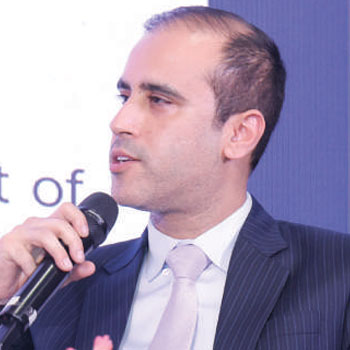
Rajeev Saraf: Given the changing geopolitical landscape, self-reliance has become more important than ever. It's always good to build a self-reliant ecosystem. Of course, every country can't do it. But, the good part is that we in India have the tech and we have the people to do it. I think it must be done very strategically.
It's not a small journey—you cannot look at what you're consuming today. You must have that futuristic mindset—we are slightly late on the whole AI buzz. Maybe there's a new technology, or quantum computing which people think will be driving everything for the next few years. What we can do is start investing more into the futuristic technologies.
Q: How can we leverage branding and Intellectual Property (IP)creation in India to compete globally or generate export and manufacture for the world?
Puneet Handa: The government specifically need to emphasise more on how the PLI schemes get integrated with design. Next, if there is no incentive, there is no reason to invest in IP. We have to look forward on future technologies, and how do we contribute to it, how do we participate into our 6G alliance, how do we build a brand, and how do we promote that brand of innovate India, is important. Government needs a very incentivised model around it to build that IP system.