From Defence to Education
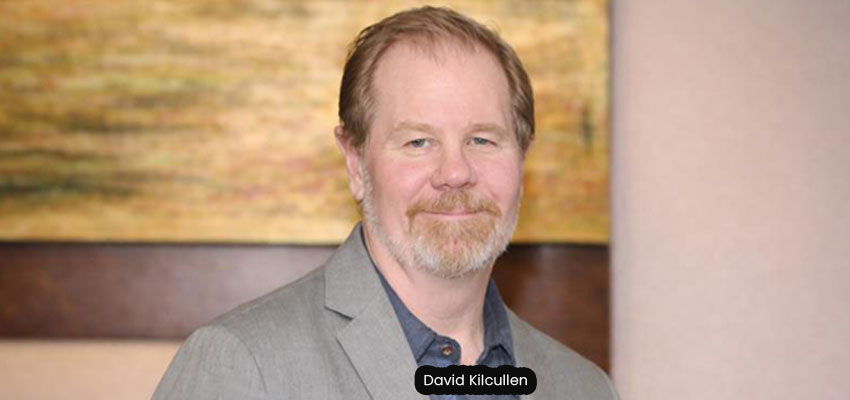
A scholar-practitioner at the intersection of policy, education and global affairs, David Kilcullen is President and CEO of Cordillera Applications Group, Inc. and Professor of International and Political Studies at the University of New South Wales (UNSW) Canberra. His academic work consistently moves beyond abstract theory into the lived realities of politics, governance and social stress. Through teaching and research, he explains why cities have emerged as critical pressure points, how fragile states slide into disorder almost unnoticed, and why climate stress is an immediate catalyst for instability rather than a distant concern. In an interview with Corporate Citizen, Kilcullen describes a world that defies neat categorisation. Contemporary conflict, he argues, is best understood through education and analysis, as it rarely begins with formal declarations or ends with tidy agreements
Corporate Citizen: Could you outline your military education and explain how it shaped your later academic appointments, including your professorship at the University of New South Wales (UNSW)?
David Kilcullen: I was a cadet at school, something with origins back to the British colonial period in Australia and involving a combination of leadership skills, character development and physical competence. So, I was in some form of military education from the age of 12. I left school at 17 and went straight to the Royal Military College in 1985 and then transferred to the newly formed tri service academy Australian Defence Force Academy (ADFA), when it opened in 1986. I then returned to Duntroon for professional ‘finishing school’ and graduated into the infantry as a Lieutenant before completing an honours degree focused on languages, comparative politics—primarily Asian studies, but since the Cold War was on, also studied Chinese Communist and Soviet politics and Marxist theory). Both Duntroon and ADFA partner with the University of New South Wales (UNSW), which is one of Australia’s ‘Group of 8’ leading universities and also a top 20 university worldwide—so I was very fortunate to have a world-class academic education alongside my military training. UNSW just received UGC permission to open a new campus at Bengaluru and offers opportunities for Indian students at its main campus in Sydney also.

Later in my career, after several regimental and instructional postings, the Army sent me to the Australian Defence Language School to study Indonesian and Malaysian, and I served in both countries. I completed my PhD on guerrilla warfare in Indonesia and its effect on the political and ethnological development of both the Indonesian state and village-level society in Indonesia.
Ten years later, the Rector of UNSW Canberra, Australia asked me to consider joining the University as a professor, and simultaneously the President of Arizona State University (ASU), which is closely affiliated with UNSW and King’s College London in the PLuS Alliance, offered me a Professor of Practice role, and I agreed to a double appointment.
Today, I find myself having come full circle, teaching postgraduate students and supervising PhD and graduate research students at UNSW and ASU, and interacting with professional education students.
"We focus on teaching students how to think, not what to think—ensuring they understand timeless principles in sufficient depth that they can interpret current reali ty against these, and adapt them "
— David Kilcullen
CC: You served during the post-9/11 period in several advisory roles. Can you describe your responsibilities during that time and how those experiences changed your view of modern conflict?
I served initially for the Australian government working on counterterrorism in Southeast Asia, before being asked to serve in the Pentagon as an advisor to the Quadrennial Defense Review, which is the four-yearly white paper that the US defense department prepares for congress. I was then asked to stay as an advisor to the US State Department, as chief of strategy in the officer for counterterrorism. This was at the height of the wars in Iraq and Afghanistan; so that became a key part of my role. In 2007 when the Surge took place in Iraq, I was senior counterinsurgency advisor to General David Petraeus in Baghdad, and then returned to State Department as an advisor to the U.S. Secretary of State, Condoleezza Rice. I learned an enormous amount just by being around such senior people.
CC: How did your shift from frontline service to academia unfold, and what were the biggest challenges in changing from practitioner to educator?
The biggest challenge, for me, was in meeting students where they are at: today’s students are different, with different skillsets, interests and motivations, than we had in my days as a student, and learning how to meet those needs in a way, and at a pace and timing that they are ready for, was the key challenge. For me the most exciting part of being an educator is watching the spark of enlightenment and understanding, suddenly take hold of someone, and then helping them feed that fire with the access to the right knowledge and resources to pursue their quest. It’s only a minority of students who get to experience that, but it makes everything else worthwhile.
CC: In what ways did your service and alumni connections influence curriculum design where you teach — were there specific changes you championed?
Arizona State University and UNSW both have very well-developed curricula on national security, so there was not much to add. However, my background and operational experience prompted me to urge an expanded focus on urbanisation, including urban development, urban system and conflict, including warfare in cities and on military innovation—particularly, the nexus between technology and strategy.
CC: With rapid advances in drones, cyber tools and artificial intelligence, how are training and curricula at institutions like ADFA evolving to stay relevant?
Across the professional and world, AI tools are massively impacting how we teach and particularly how we assess our students. Most universities currently restrict students from unacknowledged use of generative AI, but detecting when a student is using AI is increasingly hard. Many of us, myself included, are focusing more on viva voce exams and other direct face-to-face interaction, as a way to ensure students have really absorbed the material, while de-emphasising essay-writing as a basis for assessment.
CC: How do you balance teaching timeless military principles with the need to prepare officers for rapidly changing technological and urban battlefields?
We focus on teaching students how to think, not what to think—ensuring they understand timeless principles in sufficient depth that they can interpret current reality against these, and adapt them. We are trying to develop students military judgement and critical thinking skills, while also ensuring they are fully abreast of current practical, technological and tactical developments.
CC: How would you compare India’s National Defence Academy and Australia’s Defence Force Academy—key similarities and meaningful differences?
Both academies are tri-service institutions bringing together Army, Navy and Air Force cadets for their initial training prior to commissioning, and both seek to connect with a career-long joint service education programme that builds competence and knowledge throughout an officer’s career. In terms of differences, ADFA’s partnership with UNSW, which is a global top 20 university, has been a long-standing strategic relationship ensuring that the military side of the education programme is tightly coupled with a world class academic institution that is independent of defence and can ensure quality
"I often receive requests from Indian students to su pervise their research; while we are generally very positive about those requests, there are a number of visa and funding require ments that students need to meet"
CC: From your perspective, what role do Indian students play in Australian defence and academic institutions today, and how strong is the appetite among Indian candidates for professional military and security courses?
We do not currently see large numbers of undergraduates or initial training students, but UNSW has had a number of very talented Indian students—many of whom are current or former senior defence or police officers— undertake higher degrees by research, including PhDs. I often receive requests from Indian students to supervise their research; while we are generally very positive about those requests, there are a number of visa and funding requirements that students need to meet. Those details are available on the university website, but are outside the purview of individual professors like myself. I would urge anyone who is interested to check this out directly—and also note that the new UNSW Bengaluru campus may open up a number of new opportunities.
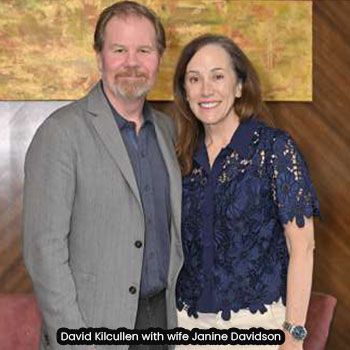
CC: How did you and Janine meet and begin your life together?
Janine and I met when I was first posted to the United States, working in the Pentagon on revisions to the Iraq War strategy. We met at a small conference, bringing various strategists and other experts together to assess how to respond to the growing insurgency in Iraq. We were then friends and colleagues for several years before we eventually started dating, and got married in 2010. I jokingly tell people that I’m a war bride—I came to America because of the war, but stayed because of Janine.
CC: What struck you most about India during your visits, and what would you most like to see or do on your next trip?
The people here are amazing. Friendly, intelligent, entrepreneurial, accommodating. I was struck particularly by the openness of discussion and the discipline shown by the students I interacted with. We saw some absolutely amazing things here: it was a very memorable visit indeed. On a future trip, I would like to engage more with my professional military colleagues if possible and to see the Himalayas. I have seen them from the other side, from Afghanistan, and have always wanted to visit them from India.
CC: You’ve briefed and advised senior policymakers. Which leadership lessons from counterinsurgency are most transferable to corporate crisis management and strategy?
Senior decision makers are extremely busy, with limited time to engage on complex risks and trade-offs. As a senior advisor, your job is to make sure they have all the relevant facts and understand the risks and trade-offs involved in any decision often, it’s a matter of helping them visualise what’s going on at the tactical level so they can align strategic decisions with what’s actually feasible on the ground. I think all those considerations transfer well to corporate environments, maybe the main difference is that you get shot at less often when trying to come up with corporate versus counterinsurgency solutions.
CC: Looking ahead ten years, which emerging threats worry you most, and how should governments and businesses prepare?
AI and its effects on employment, knowledge generation and warfare is one key issue. Improving air quality—for health, economic and social reasons as much as for broader climate concerns, is going to be critical for India as for many other places. Handling the persistent risk of terrorism and extremism (from all parts of the political spectrum) while also dealing with acute challenges such as the rise of China and the increasing unpredictability of the United States, will also be key. For businesses we advise, the key concerns are workforce resilience, education in technical fields that can’t be done by AI, access to reliable and affordable energy sources, and ensuring data accuracy.