Classroom to Career Hub
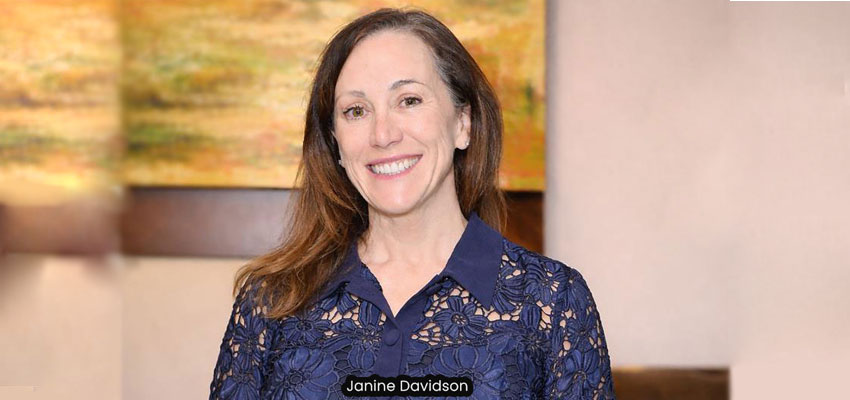
Passionate about public service, leadership, Janine Davidson, PhD, is a thought leader on higher education, the US foreign policy and national security. She began her career as an Air Force officer (cargo pilot). She was the first woman to fly the Air Force’s tactical C-130 and also flew the C-17. Presently, she is the President of the Metropolitan State University (MSU) of Denver. Before that she had also served as the 32nd Undersecretary of the US Navy, appointed by the then President Barack Obama. Davidson is the president of MSU since 2017. She is also co-teaching a course on the philosophical and legal origins of freedom of speech in the United States, and guest lecturing on international relations and soft power in 2025. Davidson, who is full of vigour and passionate about her work, provides an insight into the higher education scenario to Corporate Citizen, during her recent visit to India, where she gave a keynote speech, at the 'Society of Indian Academics in America (SIAA) - Sri Balaji University, Pune (SBUP) International Conference on Indian Academic Issues 2025', joining scholars from across India and around the world
Corporate Citizen: Please tell us about your role as an educationist and as a former Air Force Officer?
Janine Davidson: I’m actually a non traditional university president. I began my career as an Air Force pilot, flying cargo planes and later working in national security. After leaving the Air Force, I pursued a PhD in International Relations and spent about 13–14 years in Washington, DC, moving between academia, think tanks and government, including the Pentagon. I served at the Council on Foreign Relations, taught at George Mason University, and later became Undersecretary of the US Navy. Eventually, I applied for the role of University President, something I had never imagined, and I’ve now been at Metropolitan State University of Denver, for over eight years, a role I truly love.
CC: That’s a remarkable transition—from the frontline, defending the nation to the closeted world of higher education leadership. How did you experience that shift?

At senior levels, whether in government or education, leadership becomes the core focus. It’s about people, strategy, budgets, and long term vision. When the political landscape shifted in 2016, I felt a strong pull to lead an institution outside the Washington bubble. Higher education was under scrutiny on issues like cost, relevance and access, and I wanted to engage directly with those challenges.
CC: Give us a background of your academic degrees?
My bachelor’s degree was in architectural engineering, funded by the Air Force. While engineering wasn’t my passion, it enabled me to become a pilot. After several years of flying and being stationed in Japan, I became deeply interested in America’s role in the world. That led me to pursue graduate studies in international relations, culminating in my PhD between my Air Force service and my Pentagon role.
"Nationally, India now accounts for about 27% of all international students in the US, with China close behind. However, there has been a sharp decline of around 40–48% year on-year, in Indian student enrolments recently. Reasons include visa challenges, political perceptions, and concerns that the US maybe less welcoming. I want to emphasise that campuses remain inclusive, diverse, and deeply enriched by international students"
— Janine Davidson
CC: What is your current role at Metropolitan State University of Denver?
I am the President of the university, which is the highest executive position. In the US system, we use the titles 'President' or 'Chancellor', rather than 'Vice-Chancellor'. We are a comprehensive public university located in Denver. Students can major in over 40 disciplines, including theatre, hospitality, economics, philosophy, aviation, engineering related fields and more. Academically, we serve a diverse and largely first-generation student population. We compete in National Collegiate Athletic Association (NCAA) Division II athletics. Our women’s volleyball team recently won a national championship. We also have baseball, softball, soccer, basketball, and other sports. While students can’t major in sports directly, they can pursue degrees such as sports physiology.
CC: Public universities in the US face funding pressures. How has this affected your institution?
State funding for public universities in the US has declined significantly over the last 25 years. As a result, universities have had to raise tuition fees, which affects affordability. We constantly work to balance efficiency with access, but it remains a serious challenge.
CC: In recent times, the US campuses have witnessed political and social tensions due to antisemitism. Has your university been affected?
We did experience pro-Palestinian protests, including a temporary encampment, but they did not escalate into antisemitism. However, there was anxiety among students, particularly within the Jewish community, due to national media coverage. Our responsibility was to address that fear and ensure safety and dialogue.
CC: What trends are you seeing with international students, particularly from India?
Nationally, India now accounts for about 27% of all international students in the US, with China close behind. However, there has been a sharp decline of around 40–48% year-on-year, in Indian student enrolments recently. Reasons include visa challenges, political perceptions, and concerns that the US maybe less welcoming. I want to emphasise that campuses remain inclusive, diverse, and deeply enriched by international students.
MEANINGFUL DIALOGUE
I was honored to keynote the Society of Indian Academics in America (SIAA) conference, joining scholars from across India and around the world. Our conversation focused on the responsibility institutions of higher education have to educate, inform, and prepare citizens for an increasingly interconnected world. These exchanges are a powerful reminder that democratic resilience, academic freedom, and global stability depend on thoughtful, principled leadership. Grateful to SIAA for the invitation and the opportunity for meaningful dialogue.
— Janine Davidson,
CC: Cost is another major concern for international families. How do you respond to that?
The US system includes private elite universities, private institutions and public universities. While private elite schools may appear expensive, they often provide substantial scholarships. Public universities are more affordable overall, but out-of-state and international students pay higher tuition fees because state funding doesn’t cover them. Costs vary widely depending on the institution and programme.
CC: Which academic programmes are most popular at your university?
Biology, psychology and criminal justice, consistently attract the highest enrolment. Students widely aspire to careers in medicine or public service. Employers, however, are also seeking graduates in engineering, advanced manufacturing, aviation and hospitality—areas where we are actively expanding.
"I actually have a message for adults: trust Gen Zs. They are thoughtful, passionate and hardworking. For students, I always say, nothing is irreversible. You don’t need to have everything figured out"
CC: How does your university support career placements and employability?
One of my key initiatives is the 'Classroom to Career Hub'. It connects students directly with employers and helps first-generation college students access professional networks. We’re integrating this hub into a new 12-storey student housing building, so it becomes a visible and central part of campus life.
CC: This is your first visit to India. What are your impressions?
India feels incredibly vibrant, full of energy, warmth and friendliness. I’ve always loved Indian food, and the people I’ve met here strike me as serious, motivated and thoughtful.
CC: Do you see parallels between leading the Pentagon and leading a university?
Surprisingly, yes. In both cases, you lead experts who don’t want micromanagement; they want support and resources. Budgeting, prioritisation, and public accountability are very similar. Even my experience as a pilot helps during crises—remaining calm, planning ahead, and clearly defining roles.
CC: Do you teach in your University?
I’ll be co-teaching an elective course on `Free Speech’ in America, offered through political science and communications. It’s a timely and important topic for students today.
CC: Finally, what message would you like to give to Gen Zs?
I actually have a message for adults: trust Gen Zs. They are thoughtful, passionate and hardworking. For students, I always say, nothing is irreversible. You don’t need to have everything figured out.
CC: What is the philosophy of life do you live by?
Find your balance and freedom of action and be grounded in kindness.