Leading the Luxury Equation
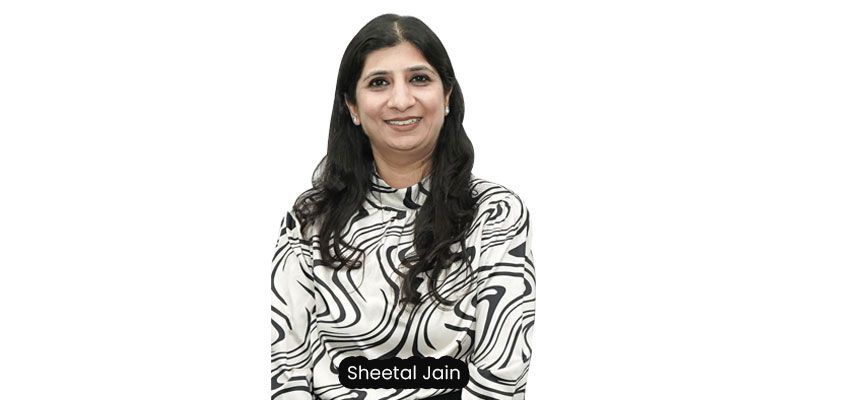
Some careers take shape by chance, others by choice. For Sheetal Jain, founder of Luxe Analytics, it was a mix of both. As a teenager, she wanted to design clothes, however, life took another turn. She stepped away from that dream for years, but it never left her. She found her path back into the world of luxury through a research programme. Her PhD became the foundation for Luxe Analytics, a firm that now advises major global brands. In a chat with Corporate Citizen, she shares the tale of her career's turning point, the gaps she saw in the luxury industry, the skills future professionals will need, and what the industry needs to understand next
Corporate Citizen: What was the key turning point that shaped your professional journey?
Sheetal Jain: I think the best decision I made in my life, the one that truly shaped who I am today, was choosing to do a PhD in the luxury domain. By choosing this area, I not only earned the degree but also carved my career.
CC: Your PhD journey—can you share how your early dreams and circumstances eventually led you there?
I always had a dream of becoming a fashion designer. So, 26 years back, I completed my fashion designing course from the National Institute of Fashion Technology, Delhi. I wanted to be a designer, but since I come from an orthodox Marwadi family and the culture was very different, jobs for women were not considered a good thing at that time.
In my family, my grandparents wanted me to get married, so I could not pursue my dream of becoming a fashion designer. And, as we say 'We all are just actors and the Almighty is the director', post my marriage and the birth of my baby I thought that I should do a PhD. Incidentally, mine was the first empirical study to be conducted on luxury consumer behaviour in India. However, at that time I didn't know that I would establish a startup in this domain. It just happened organically because while I was doing my PhD, it was mandatory to write a few research papers, and to my surprise my work got published in top international journals. So, because of my research work, I got some consultation work naturally. Then I thought to structure this, since I was helping my husband with our consulting firm and we already had fortune 500 clients with us. I had that experience, so I decided to focus on the niche which I loved. In 2017, I started Luxe Analytics, and from then on there is no looking back.
CC: What were the most unexpected things you discovered about Indian luxury consumers during your research?
From my PhD, I found a contrast in why consumers buy luxury in India versus in the Western world. In the West, people admire craftsmanship, quality and the uniqueness of a product. They would buy luxury products which are not even so popular in the Western world.
However, in India I found that it is more about conspicuous consumption and herd mentality. Here the consumers are bandwagon buyers. They buy because others are buying, not because it's great in terms of craftsmanship or quality. They are mainly buying because they want to show to the world or to get recognised by the society—those were the prime considerations and motivations for buying luxury in India.
Hence, the result of the research showed that in contrast to the western world, we cannot have copy-paste strategies. The brands which have been very successful in the West, if they apply same strategies for the Indian market, perhaps they won't be that successful, because India is a very different market. Here the Indian consumer behaviour and psyche are very different. So, it's very important for us to understand that you must 'Think Indian to win Indians'.
"Luxury brands have to know what's new, how the world is changing, how new consumers are evolving, and they have to change with the pace of growing tech- nology and digitisation"
- Sheetal Jain
CC: How did Luxe Analytics come to life, and what made you feel there was a real need for a company like this in the industry?

Luxe Analytics organically came to me while I was doing PhD. My curiosity for the subject grew more as I read so many research papers on why people are buying luxury in different countries and understanding how the brands are selling so expensive products. Everything was so intriguing for me. As I started writing research papers, it got a lot of eyeballs because it was the first ever study conducted in India. Around that time, the global brands started talking about coming to India.
When I started my PhD in 2012, luxury was at a nascent stage in India. The first luxury mall in India opened in 2007—so it was all very recent. At that time people were becoming aware of what luxury is, there was more brand consciousness in India, and this is what the global brands wanted to tap. They saw India as a lucrative market because of its huge population.
Based on my research on Indian psyche and Indian consumer behaviour, people started mailing me for strategies to enter India. A lot of expert interviews, expert advisory and consulting, started happening. I realised that there was a gap, there were hardly any companies or research intelligence firms who knew about India in terms of the luxury or affluent Indian consumers. There was no clarity on it, but my articles and research work gave that visibility. A lot of people started approaching me and I felt a company could genuinely solve this gap.
Luxe Analytics has three verticals. The first is Research and Advisory—we work closely with leading European luxury brands, providing in- depth research and strategic advisory on entering and expanding in the Indian market. In parallel, we support established Indian luxury brands as well as startups, by shaping their marketing and branding strategies to build strong, scalable luxury propositions. The second vertical focuses on Training and Capability Building—we design and deliver corporate training programmes and workshops for both Indian and global brands. These programmes cover key areas such as luxury brand management, luxury marketing, and building and sustaining a luxury brand in emerging markets. Our third vertical is Education. We introduce specialised luxury management programmes at top Tier-B schools in India, including several IIMs. With an increasing number of luxury brands entering the Indian market, there is a clear need for skilled talent that understands the nuances of luxury. These programmes are designed to bridge that talent gap and create industry-ready professionals for the luxury sector.
I have done lot of master classes, workshops and expert sessions with top B-Schools in India like IIM Ahmedabad, IIM Bangalore, ISB Hyderabad, IIM Lucknow, MDI Gurgaon and so on. I am regularly invited by International premier B-Schools such as ESSEC Business School France, ESADE Spain, EHL Switzerland, Glion Institute of Higher Education, Switzerland to name a few. So, I have been to a lot of these places to talk mostly on emerging luxury markets and India as the next global hub.
CC: Since you have helped various global luxury brands to enter or expand in the Indian luxury market, what are few things you will suggest brands should consider while operating in India?

It is very important for brands to segment Indian luxury market into three. First are connoisseurs—those who buy luxury for the craftsmanship, for the quality. Secondly, we talk about the conspicuous buyers who buy luxury goods in India for logos. Third are the value seekers who buy luxury in India only when it is on discounts. They will wait for the entire year to buy when those luxury products as they want to have that branded product without hitting hole in their pocket.
India is a very diverse market—Northern India is very different from the southern India. ‘One-size fits-all approach does not work in India. You have to know that within India, we have many 'Mini Indias'. So, you have to understand the psyche of each market, each sub-market, while also doing the categorisation.
Similarly, there should be consistency in terms of product parity and price parity. You cannot launch 'two season old things' in India. You should have the merchandise mix, because Indian affluent consumers are global trotters. They know what has already got released in Europe. They would not accept it after two seasons in India. They want that collection there and then, else they would not buy in India perhaps. There should be more price parity because of high import duties. It refrains Indian consumers to buy in India.
So, if there will be more price parity, they have to reduce the duty, if duties are not reduced here, then they might have to reduce the price in such a way that they could adjust the duties and more or less the prices are same across the globe.
Price parity matters too. High duties discourage purchases. Although improvements have been made, there is still a 10–40% difference in many categories. More parity will encourage Indians to buy within the country.
CC: How do you manage to stay balanced, energetic and positive, through it all.
To be honest, Yoga is the secret sauce of my happiness. I am an ardent fan of yoga and have been practicing yoga religiously for over 10 years. If I don't practise for 4-5 days, I feel like I am missing something in life. Yoga keeps me calm, maintains balance between work and personal life, and makes me feel happy and relaxed.
"India is a very different mar- ket. Here the Indian consumer behaviour and psyche are very different. So, it's very important for us to understand that you must “Think Indian to win Indians"
CC: In your experience, how does understanding customer psychology influence the way luxury brands build their strategies?
It is extremely important thing because if you get grip of the psyche of your customers, then perhaps the chances of you winning them is high. For example, to engage Gen Alpha and Gen Z— who will be the core luxury customers—brands are collaborating with gaming platforms, such as Louis Vuitton with League of Legends, Gucci with Roblox, MAC with Animal Crossing. These kinds of collaborations help them to engage with the younger customers. So, these brands must understand the changing, evolving consumers accordingly.
Earlier, lot of luxury brands were reluctant of going online because luxury has always been considered as something experiential, related to touch and feel. But, during the pandemic they had no choice. Stores were shut, so they went digital— marketing online, selling via WhatsApp, using social media actively.
Most of the luxury brands started their marketing and branding digitally. So, brands have to know what's new, how the world is changing, how new consumers are evolving, and they have to change with the pace of growing technology and digitisation.
Even if you are in the luxury industry you have to make the best use of what's trending. However, you have to still stick to your roots, else you lose your soul. Luxury brands have to stick to their brand DNA or else, they'll lose their entire meaning of existence.
CC: When you meet early-stage startups, what do you personally look for before deciding to invest?
For me the most important factors are the founder, the team, the gap they are trying to fill, and the impact they will create in the society. So, all these things are really important while I'm looking for any startups for investing.
CC: How is AI and technology influencing the luxury retail and the way consumers engage with brands today?
It's influencing in a big way. Many retail stores have advanced technology, such as smart dressing rooms. You can check whether your size or the colour is available in the store. You can also get the similar recommendations or preview your look on smart mirrors—even see how outfits look under night lighting. You can share your picture with your friends and get their real-time feedback.
Most importantly, by having these smart mirrors, you leave data with the brand because data is gold today. With that data, they can understand what is selling, what is not, how can they do hyper personalisation, what various customers are wanting etc. All this technology engages consumers and at the same time, it helps the brands to be more intelligent. However, the role of human connect cannot be replaced by AI in luxury.
CC: Your advice for the young students or professionals who want to build a career in luxury management?
“Today the reader, tomorrow the leader” I would say. Keep reading, know what's happening in the industry and the current trends. It is very important because nothing is permanent, change is only constant. You have to understand how you can evolve with the evolving times. For the luxury industry you should possess both the technical skills as well as soft skills—both are crucial. Use all available resources, find the best learning tools, and keep yourself updated.