Why can’t India beat Thailand?
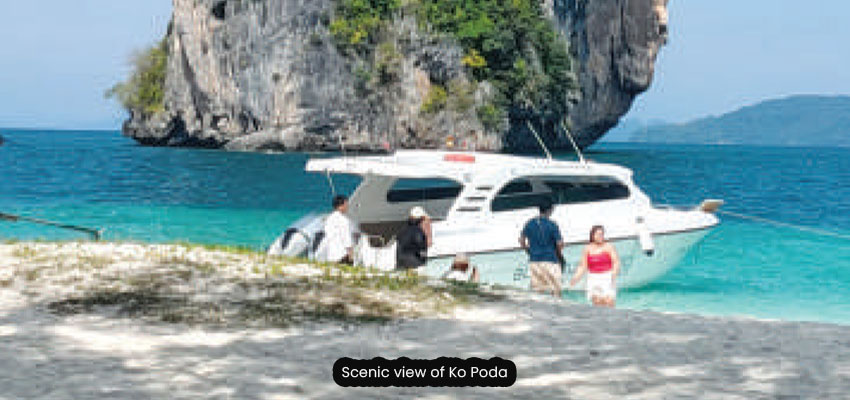
On a recent holiday to Thailand, I found myself confronted by several quietly sorrowful moments. Across every destination I visited— Phuket, Krabi, Chiang Mai and finally Bangkok—the same pattern repeated itself with striking consistency. Roads were free of garbage and potholes, stormwater drains were thoughtfully designed and seamlessly integrated, and public toilets were uniformly clean and functional. Given the Christmas season, tourists from the Western world formed a significant part of the crowd, moving through these spaces with evident ease and comfort.
What unsettled me most was the realisation that these are not extraordinary achievements but basic civic amenities which remain conspicuously absent in India, a country far larger, far better known, and far richer in history and potential than Thailand
Despite having a rich cultural and architectural heritage, India is often criticised internationally for its tourist-unfriendly attitude. According to the latest data, foreign tourist arrivals in India declined to 61.8 lakh during the April–September 2025 period, down from 70.6 lakh in the corresponding period last year, marking a 12.4 per cent drop. Although, Thailand is a much smaller country, The Tourism Authority of Thailand (TAT) projected 334 lakh foreign visitors in 2025 and achieved that.
India has repeatedly faced international criticism regarding tourism infrastructure and visitor safety, particularly around public sanitation, road conditions and women’s safety. These critical factors appear across foreign media reports, travel advisories, academic tourism studies, and most visibly on social media, where visitor experiences amplify rapidly and influence the to-be traveller who has India on his/her bucket list.
Some of the tweets that illustrate negative perceptions of India’s tourism issues should distress any Indian, particularly because it is not rocket science for any government to implement them:
@IndianTechGuide
“Public toilets in India are the worst places to visit.”
@IsmatAraa
“It’s unacceptable that women in India still have to roam the streets for hours just to find a public restroom. A country aiming for global …”
@arvindnayak1
“Garbage everywhere... no toilets for tourists... and yes mistreating women tourists... and a blind policing.”
@AnirudhKejriwal
“I have travelled to enough countries to realise this uncomfortable truth: India is one of the hardest places in the world to travel.”
We are aware of how Goa which was topmost on the international tourist map has been degraded to a pitiful low due to local politics and corruption. Recently, a visitor to Rajasthan had tweeted about how traffic congestion and garbage on roads, had put him off. My recent visit to Indore and Ujjain was disappointing because of uncleanliness (despite Indore being awarded as the Clean City, eight times), bad roads, dirtiest public toilets and traffic jams.
The criticism of India’s poor tourism (which has the potential of being a profitable industry) is less about lack of tourist attractions and more about governance, civic infrastructure and social safety. India is widely admired for its heritage, cuisine, and cultural depth, but negative visitor experiences, continue to undermine its tourism brand.