Digital De-Addiction: A new hope
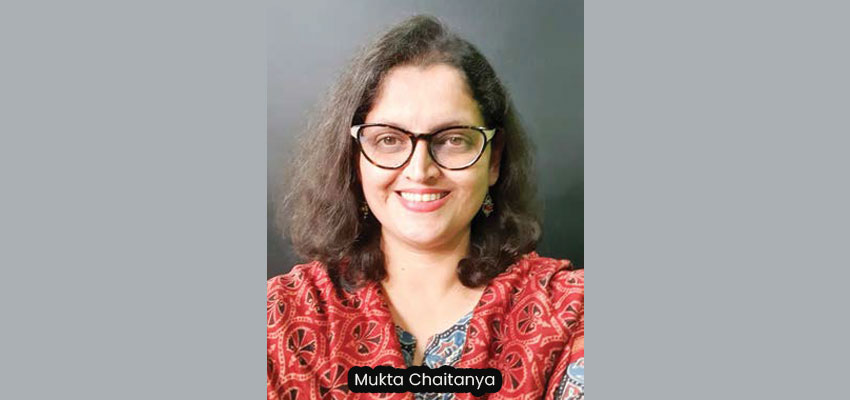
After drug and alcohol de-addiction centre, psycho-social expert, Mukta Chaitanya delves into the need of rehabilitation centres for mobile and internet addicts, mostly youngsters. She runs two de-addiction centres for internet and screen dependency—one near Khopoli, Raigad and another at Kudal, Sindhudurg. She has authored Marathi books 'Strugglers', 'Tera te Tevis', 'Screen Time', and a forthcoming title on cyber parenting. She also hosts ‘Screentime with Mukta’, the first Marathi cyber podcast. Her work positions her as a leading voice on the psycho-social impact of digital media in India. Read on for insightful information on a subject that concerns most families
Corporate Citizen: What prompted you to conceptualise a rehabilitation centre specifically focused on mobile and internet addiction?
Mukta Chaitanya: I have been working in this field for over 12 years, engaging closely with schools, colleges, corporates, parents, and individuals across age groups. Over time, I began noticing not just dependency but a clear pattern of addiction to the internet and digital devices. Human beings are social and coexistent by nature, yet excessive screen use is increasingly disrupting that balance. This became particularly pronounced after the Covid-19 pandemic, when almost every aspect of life—education, socialising, even celebrations—shifted online. While technology is indispensable today, the absence of structured intervention for digital addiction made me realise that awareness alone is not enough. We need dedicated treatment frameworks, much like we have for substance addiction.
CC: Could you explain how Gen Z specifically fits into this concern?
Gen Z has grown up with technology as an extension of themselves. Before the pandemic, issues like gaming addiction existed but were largely unacknowledged. Post-pandemic, screen exposure intensified dramatically, especially for young people. Online schooling normalised excess screen time, and many teenagers struggled to disengage even when offline life resumed. I began to think seriously about structured rehabilitation, especially for Gen Z, because their formative years are being shaped by unregulated digital exposure.
CC: How does your rehabilitation model differ from conventional addiction centres?

At Gray Foundation Charitable Trust, which runs the centre, we do not apply the same treatment model used for substance addiction. In substance abuse, the substance can be eliminated entirely. With internet addiction, that is neither practical nor desirable. Technology is unavoidable postdischarge. Therefore, our focus is not total abstinence alone but balance. We teach individuals—especially teenagers—how to manage cravings, recognise triggers, and develop self-regulation. The objective is to build conscious, controlled use rather than complete avoidance.
CC: That sounds extremely challenging. How do you practically achieve this balance?
It is challenging, and it requires sustained practice. We have designed structured therapies under the guidance of Dr. Shirisha Sathe, a senior psychologist on our panel. These therapies focus on awareness, daily planning, impulse control, and behavioural retraining. This is not a one-time instruction but a repeated practice for the brain. For example, gaming often feeds the urge to win or achieve virtually, but those achievements do not translate into real-world fulfilment. Over time, this actually increases stress rather than reducing it. We help individuals redirect that need, for achievements into real-life, tangible activities.
CC: What does the rehabilitation programme look like in terms of duration and structure?
It is a 60-day residential programme. The individual—whether a teenager or young adult—needs to stay at the facility for the entire duration. However, recovery does not end there. Since technology remains part of everyday life, we also prescribe postdischarge lifestyle practices that must be continued at home. The aim is to prevent relapse by embedding sustainable habits and behavioural changes.
CC: What kind of lifestyle changes do you introduce?
Simple but impactful changes. For instance, avoiding screens for at least the first hour after waking up and the last hour before sleeping. These two timings are neurologically sensitive and excessive screen exposure significantly affects mental health. We also introduce structured routines that reduce impulsive device use.
"Your mobile phone is not your friend. It is a tool—nothing more. The world inside that device is vast, infinite, and deeply absorbing, and it is easy to lose control without realising how deep you have gone"
— Mukta Chaitanya
CC: What alternatives do you provide to replace screen time?
Several. Art therapy, music therapy, sports, physical exercise, meditation, counselling, and work therapy. Working with one’s hands is particularly powerful. In today’s automated world, we rarely engage in manual tasks, yet they offer immense neurological and therapeutic benefits. Physical activity also helps regulate dopamine naturally, eliminating the dependence on screens for stimulation.
CC: Where is this facility located?
The facility is located near Kudal village in Sindhudurg district, in a very remote, natural setting surrounded by rice fields and farms. The environment itself is therapeutic.
We are also planning to involve residents in farm work, which offers grounding experiences that urban life rarely provides.
CC: You also mentioned a detox facility for families?
Yes. In addition to the de-addiction centre, we offer a digital detox programme for individuals and families who may not be addicted but want to disconnect from technology and recalibrate their lifestyles. This is not a resort or holiday. It follows a structured detox plan over a fixed duration, such as three nights and four days, with limited free time and clear guidelines.
CC: What age group do you admit at the rehabilitation centre?
We generally admit individuals from the age of 15 or 16 onwards. This includes teenagers, young adults, and individuals from other age groups as well. Digital addiction is not limited to adolescents.
CC: Are you confident that people, especially teenagers, will opt for this programme?
Absolutely. I am already working with several teenagers who are deeply addicted to gaming and social media. Many of them are not merely using devices; they are dependent on them. The demand is very real.
CC: What advice would you give teenagers who are currently struggling with screen addiction?
My first message is simple: your mobile phone is not your friend, it is a tool, nothing more. The world inside that device is vast, infinite, and deeply absorbing, and it is easy to lose control without realising how deep you have gone. Prioritise your real-life responsibilities—studies, daily tasks, hobbies, physical activities—before engaging with screens. Once your priorities are completed, you may use technology consciously and in moderation. You must command the device, not become its slave.
CC: That is a powerful way to put it.
Yes—technology should serve you, not replace your real world.