I am a Gen Z

Whenever people talk about my generation, the descriptions usually swing between admiration and confusion. We’re called tech-obsessed, hyper-aware, emotionally honest, impatient, creative, anxious, innovative, and sometimes all in the same sentence. But when I step back and think about what it actually feels like to be part of Gen Z, the picture becomes more personal
To be part of Gen Z—it’s less about the buzzwords floating around and more about the world I’ve grown up navigating, a world which is, fast-changing, deeply connected, frequently overwhelming, but always full of possibilities.
Don’t remember life without the internet
My earliest memories are already threaded with screens, search bars, and a universe of information at my fingertips, waiting to be explored. Technology wasn’t something I had to “learn” as it was the environment, I opened my eyes into. That shaped my and almost the entire generation’s instincts in a very specific way. When I’m curious about something, I research it instantly. When I need community, I can find it across borders. When something feels unfair, I see thousands of others talking about it openly. This constant flow of perspectives has made me question, analyse, and form opinions much earlier than I might have otherwise.
How I relate to my family
The old model of “children listen, parents decide” doesn’t exactly fit anymore today. I’ve grown up with access to information that my parents never had at my age, so our conversations often feel like a two-way exchange instead of a lecture. Many times, this leads to friction but it also builds a weirdly wholesome bridge between us by opening new avenues of discussions. They’re learning from me as much as I’m learning from them. Even when we disagree, there’s an underlying understanding that honesty matters more than pretending everything is picture-perfect. That openness has made my relationship with my family less hierarchical, like was the norm before and more collaborative, almost as if we are copilots navigating a world that’s changing and evolving rapidly for all of us.
When it comes to friendships…
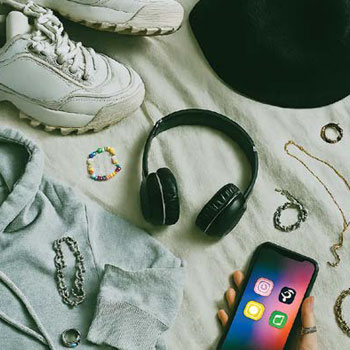
Gen Z operate like a network rather than a traditional circle. My closest friends don’t always live in the same city, or even the same time zone, but they’re the people I talk to almost every day. Technology didn’t just expand my social world; it has redefined what connection even means. We bond over shared interests instantly and deeply, whether it’s through memes at 2 a.m. or long voice notes about life. But at the same time, we’ve become insanely good at reading emotional subtleties, checking in on each other, and holding space for feelings. Friendships feel both light and meaningful at once, playful but grounded, spontaneous but loyal. These relationships remind me that even in a world that moves at breakneck speed, genuine connection is still very real, just shaped by the way we live now.
The digital upbringing
It has even rewired my expectations. Authenticity and transparency matter to me. I don’t respond well to institutions that hide behind carefully polished statements or leaders who pretend to be flawless. Growing up seeing both the best and the worst of humanity online has taught me that honesty — even uncomfortable honesty — is far more valuable than perfection. This is one of the key reasons, our generation pushes for accountability not out of rebellion, but out of a belief that people deserve the truth.
"Sometimes it feels like Gen Z didn’t get a slow introduction to how tough the world can be but were instead thrown into the deep end with our phones as both our lifeboat and source of stress"
Living in a world that never rests
Of course, living in a world that never logs off or rests, has its complications. I’ve scrolled through crises long before I fully understood them. Climate anxiety isn’t an abstract concept for me — it’s a timeline I’ve watched unfold in real time. Political polarisation, mental health struggles, economic uncertainty — all these things have been part of my consciousness since childhood. Sometimes it feels like Gen Z didn’t get a slow introduction to how tough the world can be but were instead thrown into the deep end with our phones as both our lifeboat and source of stress.
Being Gen Z—real advantages
Adaptability is one of them. We’ve grown up watching industries rise and collapse, jobs evolve, and career paths turn nonlinear. So, we don’t cling to rigid expectations; we embrace flexibility. I can study one thing, work in another, and explore three side passions at the same time — and none of that feels unusual. In a world that keeps shifting, this ability to reinvent ourselves isn’t just helpful; it’s necessary.
Another strength is how openly we talk about mental health. I don’t feel the need to hide stress behind a smile or pretend everything is fine and jolly when it isn’t. My generation has normalised check-ins, therapy conversations and acknowledging burnout. It’s not about dramatising our struggles — it’s about refusing to pretend that they don’t exist. That honesty helps me understand my limits, manage my pace, and build healthier relationships with work and ambition.
Still, the challenges are real
Being constantly connected means being constantly compared. It’s easy to feel like you’re falling behind when every success story and every young prodigy is amplified online. Add economic instability to that mix, and the pressure to “figure out life” before life even begins makes expectation and pressure becomes heavier than it appears from the outside. We’re balancing ambition with anxiety, opportunity with uncertainty, optimism with realism.
But what keeps me hopeful is the attitude I see in my own generation. We don’t shy away from difficult conversations. We don’t stay quiet when something needs to be changed. We innovate because we’ve grown up knowing that the world won’t fix itself. And even though we carry a lot — information, expectations, and the weight of the future but we also carry determination.
Learning to navigate contradictions
Being Gen Z, to me, means learning to navigate contradictions: being hyperconnected yet craving peace, being realistic yet hopeful, being overwhelmed yet still ambitious. It means seeing the world as it truly is and still choosing to believe in what it could become.
And, for all its noise, pressure, and unpredictability, I wouldn’t trade that perspective for anything in the world. It’s made me more aware, more curious, more driven — and most importantly, more ready for whatever comes next.