Phones down, please!
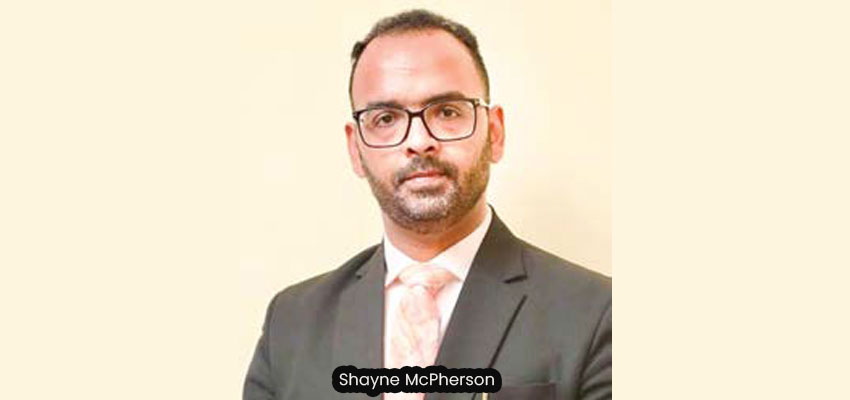
Principal Shayne McPherson paints a vivid, sometimes unsettling, yet deeply insightful picture of Gen Z’s evolving world—its fractures, its pressures, and some values that have been lost forever
Principal Shayne McPherson of The Bishop’s School, Pune, began as a student and later became a teacher at The Frank Anthony Public School, Delhi. He taught there for more than 16 years before moving to Pune. The Bishop’s School, Pune is the second school in his professional journey—a testament to his commitment and continuity in the field of education.
Over the course of decades of observing students across generations, McPherson has witnessed shifts in behaviour, attitudes, and academic seriousness. Some drastic transformations, he believes, have occurred post pandamic.
“The pandemic hit the country hard, altering the mindset not only of children but also of adults. For students in particular, the most alarming change has been their addiction to mobile screens. While digital dependence existed earlier, I find that post-covid children are far more comfortable with screens than with books, preferring e-reading and online engagement to traditional study patterns,’’ states McPherson.
He estimates that the average child’s attention span has dropped by nearly 20 percent, a decline visible from junior school through junior college. At the same time, McPherson has observed a concerning rise in aggression. He says, with a lot of concern, what were once occasional arguments have now become daily physical fights or heated verbal exchanges in schools across the country. A large part is due to social media, where children constantly consume content that encourages hyper-individualism—“voice your opinion, be yourself—but rarely emphasis social responsibility or civility.” In a world where abusive language is normalised through memes, influencers and videos, he finds that many children believe using abusive language makes them ‘cool’ or helps them fit into a group.
While Covid intensified certain behaviours, McPherson does not believe every change is tied solely to the pandemic. Some differences, he explains, arise from natural variations in student batches. “Certain batches demonstrate exceptional responsibility and organisational skills, while others do not. This ebb and flow, has always been part of school life," he notes.
On parenting styles, McPherson sees no dramatic shift. “Helicopter parents and uninvolved parents have always existed,” he says. Some parents hover excessively, while others meet the school just once a year or not at all. In fact, he cites cases where parents have never met their child’s class teacher throughout the entire schooling journey.
However, what concerns him deeply is the declining respect for teachers and elders. He describes a gradual but steady erosion of courtesy over the years. Where earlier generations would step aside respectfully when a senior teacher walked past, today’s students expect the teacher to move out of the way. Rues McPherson, “Greetings are often neglected, and cultural gestures like touching elders’ feet are vanishing.“ Though a Christian himself, McPherson calls such traditions an integral part of Indian culture that must not be forgotten.
McPherson believes that their social behaviour has undergone far more drastic change than their academic inclination. He finds that today’s students are more withdrawn within their homes, preferring to lock themselves in their rooms, glued to phones, rather than sit with family at the dining table or participate meaningfully in family gatherings. Even at events, they remain physically present but mentally absorbed in screens.
On the debated role of nuclear versus joint families, McPherson refuses to romanticise the past. Says he candidly, “I grew up in a nuclear family but remained deeply connected with relatives. The real issue is not the family structure but mindset. I have seen children from joint families who remain disconnected from elders, and children from nuclear families, especially those from armed forces backgrounds, who display strong values, respect, and emotional grounding.’’
On career aspirations, McPherson observes that Indian families still place overwhelming emphasis on medicine and engineering, often ignoring a child’s natural inclinations. He has seen many students pressurised into science despite poor aptitude, even when they excel in humanities, arts or music. However, liberal arts and new-age courses are helping parents recognise respectable alternatives beyond the traditional professions. The National Education Policy (NEP), too, has encouraged broader interdisciplinary exploration.
McPherson frequently reminds students to think ahead: “If you’re becoming a mechanical engineer, remember that in ten years, there may be no engines,” emphasising the need to stay future-leaning in a rapidly shifting world.
When asked for his message to Gen Z, McPherson states,“Wake up from your slumber. Put your phones aside. Focus on life happening around you.” He urges students to live the experiences of school and college fully, build real memories, interact with people, play sports, meet friends, and cherish family, instead of spending twelve hours on a phone only to later realise they have no stories to tell.
“Giving respect doesn’t make you smaller,” he reminds them. “Remember your family, remember your elders."
To parents, his message is equally firm: “Stop spoiling your children. Don’t give them everything at the snap of a finger. You’re nurturing a human being.” He emphasises that while schools guide, the responsibility of shaping a child into a grounded and capable citizen lies primarily with the family.