The Indian Media Barometer 2025: Scanning the State of INDIAN MEDIA
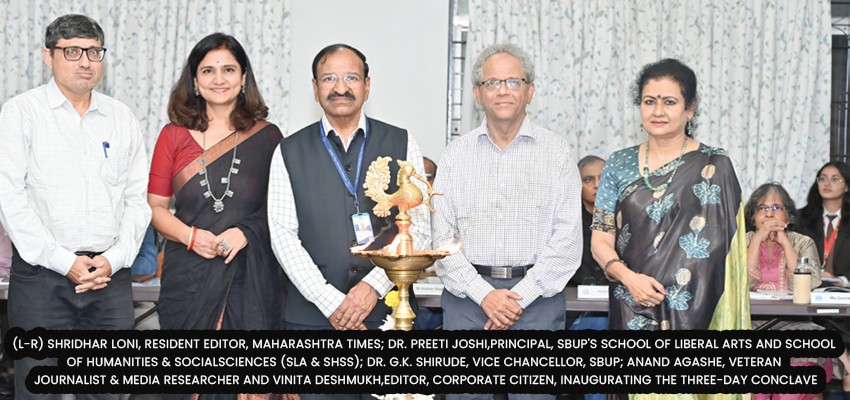
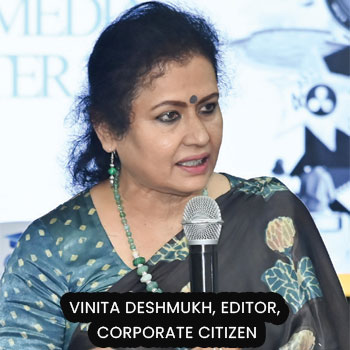
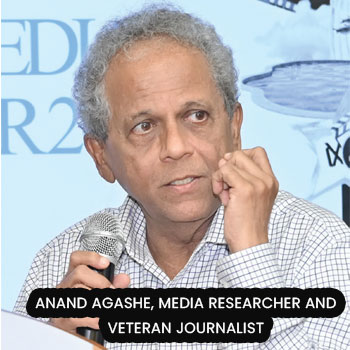
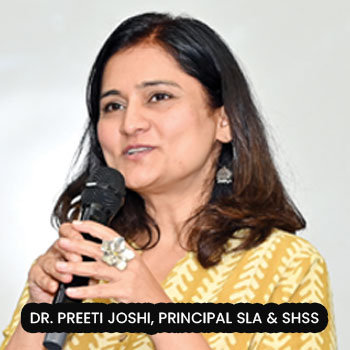
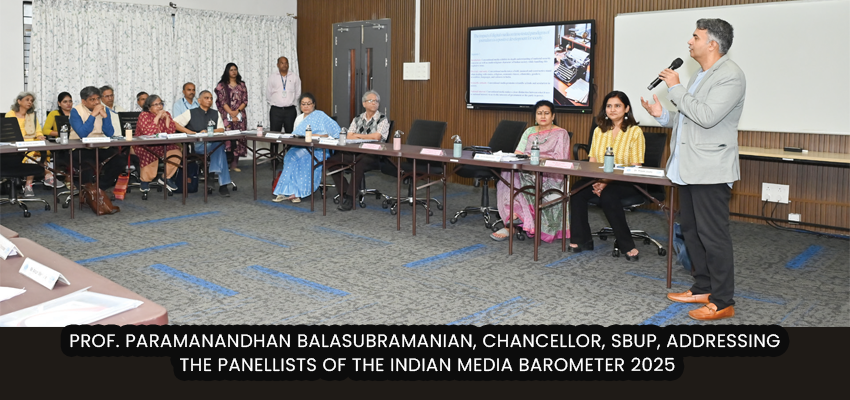
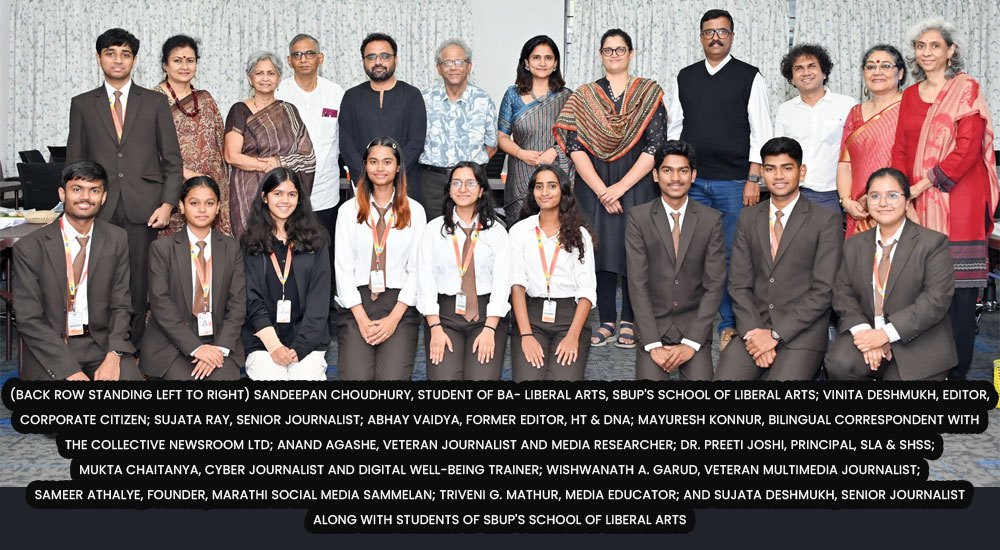
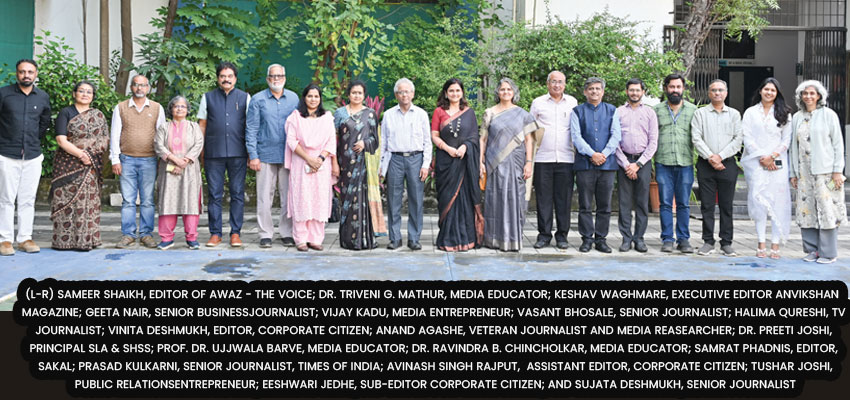
The Indian Media Barometer 2025, a closed door conclave held and hosted by Sri Balaji University, Pune (SBUP) in collaboration with SBUP's School of Liberal Arts, conceptualised and conducted by veteran journalist and media researcher Anand Agashe and editor of Corporate Citizen Vinita Deshmukh, comprised brainstorming sessions by an array of senior journalists and other stakeholders of the media, to self-reflect as well as assess the credibility and state of media as perceived by external stakeholders. A glimpse into this brainstorming conclave, conducted for the first time in India by a prestigious educational organisation
Media is intertwined with plurality. Shorn of plurality in a democratic set-up, media becomes worthless. Deprived of healthy media, plurality becomes voiceless and restive, as many parts of the world witnessed recently.
This is especially true for a country that is home to over 1.4 billion people who speak more than 1,900 languages and dialects across regions, religions, castes, cultures and vocations. They stand united even as they cherish diversity.
Does the media in India reflect Indian plurality? Presuming the answer is 'yes', does the media plurality support pluralism? Let us put it plainly. Media plurality, in practice, caters to markets. But pluralism, in its essence nurtures mutual respect among communities, sustaining their collective desire to stick to the path of an egalitarian society. That is a much harder task.
The expanse and depth of media—conventional (print, radio and TV) as well as digital and social—in India bespeaks its plurality.
"Besides Doordarshan, the State-controlled channel, there are more than 900 private satellite channels which disseminate news and other content in a wide array of languages. This medium has reached close to 22 crore households all over the country"
As of 2025, about 1.55 lakh newspapers (daily newspapers, weeklies and fortnightlies) published in various Indian languages were registered with the Registrar of Newspapers in India (RNI). Uttar Pradesh topped the list with about 16,000 Hindi publications, followed by Maharashtra with 14,000 Marathi publications. The gross circulation of all daily newspapers was close to 3 crore copies, with nonEnglish or regional language newspapers taking bigger strides than English publications. The popularity of print media in most parts of the world has declined steeply in the face of stiff competition from digital media, but India has shown a rise in the number of newspapers and their circulation. It is thus clear that, contrary to popular perception, print media continues to be extremely relevant in our country even in this multimedia era.
Radio, as a medium, holds immense potential to become people's voice if it is kept free of monopoly. But, the government controlled All India Radio (AIR) also known as Akashvani, continues to be the sole broadcaster of news in India. Leveraging its 480-odd stations across the country, AIR reaches out to over 99 percent of Indian population through its multilingual bulletins.
Proposals to allow private FM radio channels to produce their own news bulletins came up from time to time over several years, but there is no forward movement in that direction. As a result, AIR remains a government mouthpiece rather than serving as a public broadcaster in the real sense.
In sharp contrast, television occupies bulk of the time in people's conversations on media in India. Besides Doordarshan—the Statecontrolled channel, there are more than 900 private satellite channels which disseminate news and other content in a wide array of languages. This medium has reached close to 22 crore households all over the country. The well-entrenched 'breaking news' phenomenon of all the channels keeps this medium alive in public discourse for good or bad reasons.
"As of 2025, about 1.55 lakh newspapers published in various Indian languages were registered with the RNI. Uttar Pradesh topped the list with about 16,000 Hindi publications, followed by Maharashtra with 14,000 Marathi publications"
The growth of digital media, however, has outpaced that in conventional (print, radio, television) media sector by a huge margin. As things stand, there are nearly a 100 crore internet subscribers in our country with mobile phones being the principal gateway to the digital world. With more than 69 crore users of social media in the country, India happens to be the world's largest user base in this field.
The reach is not confined to cities. Two factors primarily seem to be propelling the digital media growth in rural areas. One, the young population in India, and two, government initiatives such as Digital India and BharatNet which have broad based the internet connectivity. Thus, out of the 69 crore users of social media in the country, about 46 percent come from rural areas. WhatsApp, Instagram, YouTube and Facebook are the most popular platforms at present, although the young generation is not averse to experimenting with other players as well.
Growth of all kinds of media is fine, but what about the quality of journalism practised through all the media platforms? While the prime focus of journalism is on textual, audio and visual content, the term 'media' encompasses several other aspects—technology, administration, marketing, finance etc—which facilitate the conveyance of content to the intended audiences. In that sense, journalism is a subset of media.
"Out of the 69 crore users of social media in the country, about 46 percent come from rural areas. WhatsApp, Instagram, YouTube and Facebook are the most popular platforms at present although the young generation is not averse to experimenting with other players as well "
This is a tricky and sticky issue. And so, it needs further explanation. When the Media is termed the fourth pillar of democracy, the reference is actually to journalism. Unlike the other three pillars (Legislature, The Executive and Judiciary) of democracy, the fourth pillar (Media) predominantly resides in the private sector in our country. Any private sector enterprise is required to respond to 'markets' and therefore it is understandable when media enterprises keep reacting to demands of the market. But while doing so, does the spirit of journalism get compromised? Does it reflect on the duties of the fourth pillar? Does it affect people's lives? Does it thereby influence the health of our democracy?
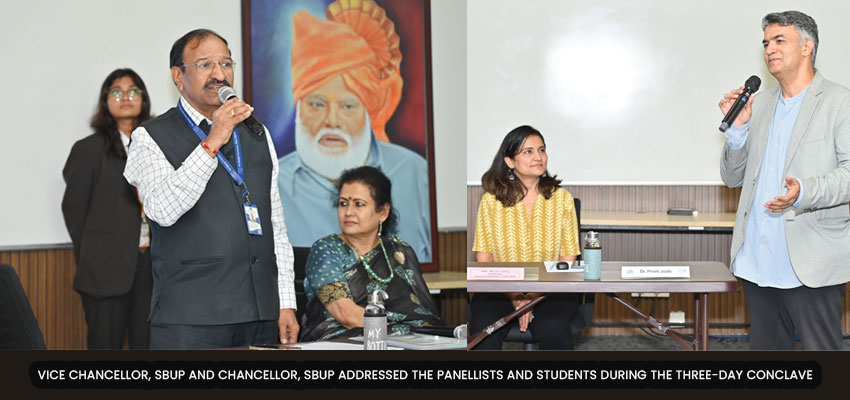
The Indian Media Barometer 2025, hosted by Sri Balaji University, Pune (SBUP) thus focused on the media's role as the fourth pillar of democracy. Issues related to other aspects of media were also discussed without digressing from the central theme.
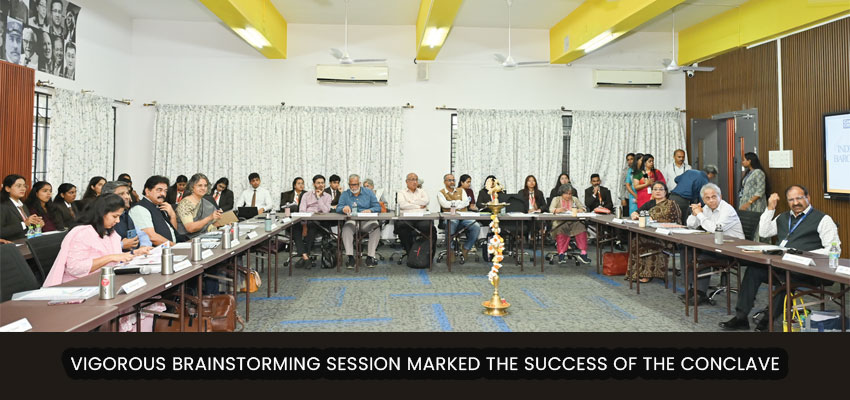
Closed-door brainstorming at the conclave ensured free and frank discussions in a structured manner. Two of the three days at the conclave were devoted to conventional media while the third day was reserved for discussions on issues pertaining to digital and social media. Students of Liberal Arts at SBUP and some senior journalists were among the observers. Many of them volunteered to raise a few points and did make significant contribution.
The carefully chosen panellists for the three-day conclave comprised internal as well as external stakeholders of media. The internal stakeholders included editors and senior journalists from some reputed newspapers and television channels, senior executives who had handled other media functions such as circulation and advertising, and media educators of repute. Among the external stakeholders were members of civil society and veteran public relations professionals.
The discussions were divided into sub-topics pertaining to specific aspects of media functioning. At the end of each session, the panellists did anonymous rating of media's current performance on those sub-topics on a scale of one to five. This attempt to quantify media's performance was aimed at making it measurable. The numbers would hopefully serve as a yardstick against which media's performance could be assessed in the future editions of Media Barometer. It is necessary to do so because democracy, as we know, is ever-evolving. So, media must also do serious introspection from time to time to make sure that it is living up to its hallowed status as the fourth pillar.
The Indian Media Barometer 2025, was the first step in that direction. Based on this experience, it can be refined in years to come. We all owe it to ourselves.