Serving Water, with Love
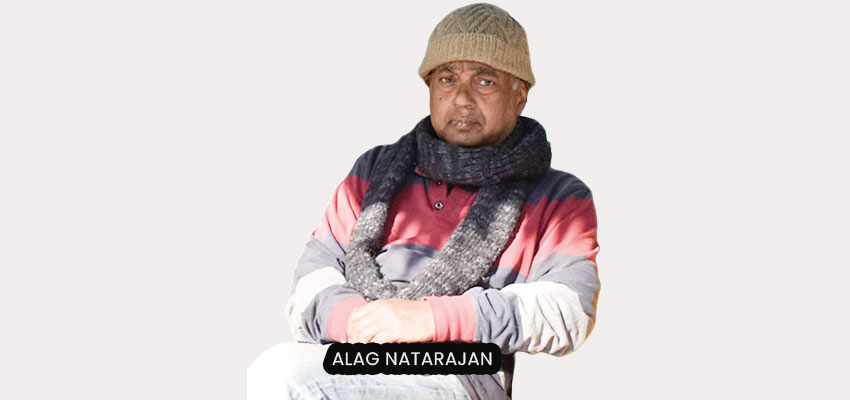
In the haze of Delhi's heat, a quiet guardian weaves through the bustling streets. This is the story of Alag Natarajan, famously known as the 'Matka Man' in the northern part of India. He talks about his noble deed when he sees people, the city forgets — the labourers, street vendors, security guards, who work under the sun, and for whom, a sip of cool and clean water is a luxury. And, he related the Indian Matka, a traditional vessel for storing and cooling water, as a simple answer to this modern need for quenching the thirsty
"I don’t believe in the word charity. I call it sharing. It’s about equality. When we serve food, we respect the people we’re serving. And, that matters"
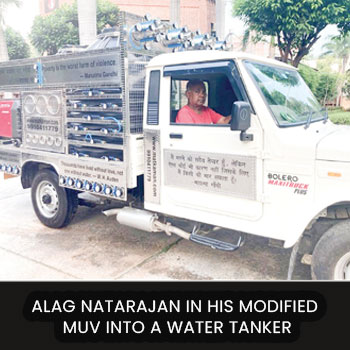
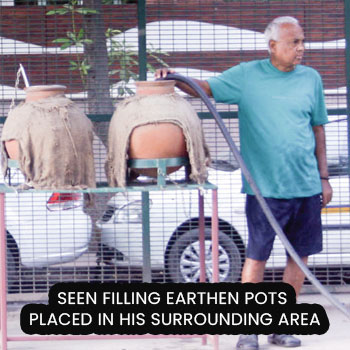
Every morning, Alag Natarajan fills drinking water in earthen pots placed at various spots around Delhi. A London-returned former businessman, Alag everyday uses a modified water tanker and goes around the city filling the empty earthen pots— an action of kindness that goes above and beyond. His aim is to make drinking water available to all. Apart from this, Alag also provides free meals for the homeless and the underprivileged. He spends few mornings each week, distributing nutritious salad to construction workers and daily wage labourers in the vicinity.
He found his world reshaped by a struggle that stripped life down to its essence and revealed a profound truth — purpose is often found in service. He is a living testament to the idea that the greatest strength lies not in moving mountains, but in carrying water for those who cannot.
Service through simplicity
Everyday at 5:30 am, Natarajan leaves his house to fill earthen pots he has installed through his 2000 litre water tanker. Though he chose to drop out of his engineering course back in the 1970s, his passion for innovation is evident when he himself modified a vehicle to ferry water.
He recalled how, while visiting a cremation ground in his area, he noticed the absence of even the most basic amenity—water. That was when the idea of his mission to provide water to the needy first took shape. “Even the workers there didn’t have access to water,” he recalls. “I thought, if a poor person needs four or five litres of water daily, how can they afford it costs Rs 20 a litre—something had to be done.”
The nickname
What began as a simple idea soon turned into a large-scale community service initiative. In 2018, Alag Natarajan installed his first earthen pot outside his home in Panchsheel Park. Security guards, domestic helpers, and drivers, quickly gathered around the earthen pot stands, feeling grateful for having access to clean drinking water in Delhi’s punishing summers. One day on Alag Natarajan's birthday, his daughter Natasha nicknamed him as the 'Matka Man' for his noble deed.
Encouraged by the response, Alag expanded, fabricating earthen pot stands in his own workshop, equipped not just with water pots, but also benches to rest and also air pump for bicycles. Today, he daily replenishes more than 100 earthen pots in the surrounding area of his residence. He has a small team — his wife, a driver, a helper, who help him to deliver around 4,000 litres of water daily.
His MUV water tanker, carries 2,000 litres and makes multiple rounds each day, to ensure every earthen pot is full. “I’m a hands-on person,” he says. “I could leave it to my staff, but I prefer being on the ground. Every time I stop, people come forward and appreciate the work I do. It gives me hope.”
Food as dignity, not charity
Water may be his primary mission, but Alag Natarajan’s compassion doesn’t end there. Every week, he hosts a community food service, feeding around 250–300 people. Unlike conventional charity kitchens, his model emphasises dignity and respect. He prepares the salad using a variety of legumes such as Chickpea, Mung Beans, Kidney Beans, sprouts and veggies.
All meals are cooked in a kitchen in his home, using fresh produce sourced personally from Delhi’s wholesale markets. The food is served in stainless steel thalis—never paper or plastic plates. Volunteers wear aprons and gloves, ensuring a hygienic and respectful experience.
“I don’t believe in the word charity. I call it sharing. It’s about equality. When we serve food, we respect the people we’re serving. And, that matters.” His water tanker is also fitted with taps for washing utensils. Stainless Steel plates are cleaned thrice before being reused, eliminating waste and plastic usage. “I had to make it sustainable. Otherwise my daughter would stop talking to me," he smiles.
Engineering kindness
Behind his initiatives lies not only compassion, but also ingenuity. With a background in mechanical engineering, Alag Natarajan himself designed and built his MUV water tanker and earthen pot stands. His brightly painted water tanker is a head turner on the Delhi roads. “It attracts curiosity— people often stop, ask questions, and sometimes even join in,” he said.
Over the years, his system has gone through continuous research and development. He has refined the earthen pot stands to make them durable, hygienic, and user-friendly. “It wasn’t perfect from the beginning, I kept improving—that’s the engineer in me.”
Beyond water
Alag Natarajan’s mission has expanded beyond water and food. In winters, he distributes blankets. His earthen pot stands often double as rest stops, complete with benches and bicycle pumps. “Everyone needs a space to rest. A driver or rickshaw puller deserves comfort too,” he says.
During the pandemic, when Delhi was under lockdown, he didn’t stop there. Using his savings, he continued to provide food and water, becoming a lifeline for many migrant workers and labourers stranded in the city.
"Life is not just about consumption but contribution. You don’t need to be rich or powerful to make a difference. You just need to care"
The man behind the mission
For someone who once lived a successful business life abroad and is a cancer survivor, why dedicate his savings to community service? Alag Natarajan answers with simplicity, “Because it cleanses me too.”
He believes acts of service are not just about helping others but also about purifying oneself of greed, jealousy and selfishness. “We are all corrupt emotionally. When I give, I also cleanse myself,” he explains.
Despite his tireless work, he remains sceptical about urban India’s sense of commitment, especially among the youth. “Youngsters approach me and promise to help, but rarely show up. Not one has stayed consistent in eight years—except one young woman recently. If you give your word, you must keep it. That’s what I want to tell the youth.”
His message is clear, "Life is not just about consumption but contribution. You don’t need to be rich or powerful to make a difference. You just need to care."